Educational Philosophy for
Early Childhood (18-Months through 4s)
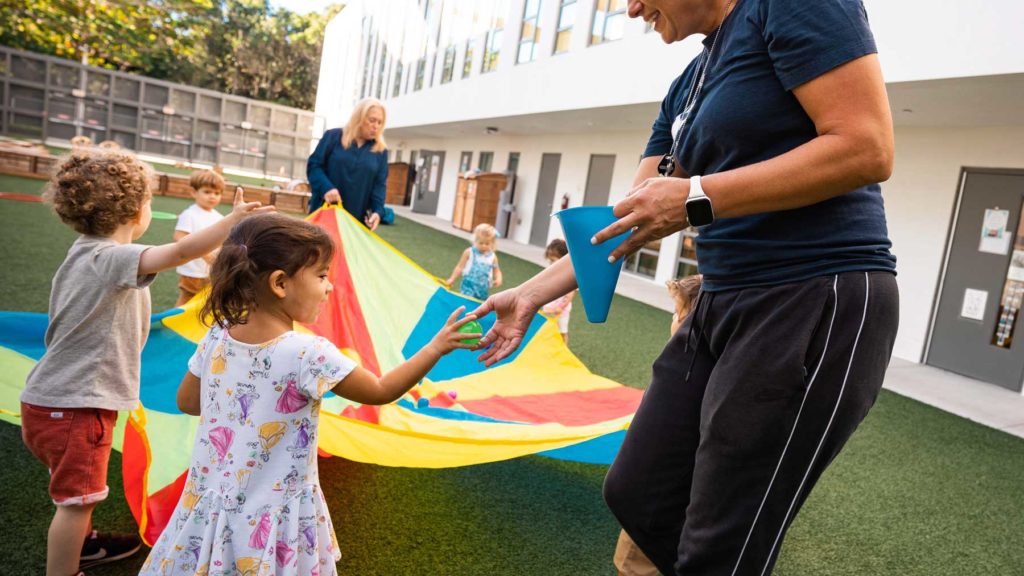
At Rambam Day School, our Early Childhood program is inspired by the Reggio Emilia approach and grounded in Jewish values. We believe children are curious, creative, and full of potential. Children’s interests, questions, and ideas are at the heart of our curriculum and help drive what we learn and how we learn it.
Through meaningful experiences, play, exploration, relationships, and thoughtful observation, teachers pay close attention to children’s ideas and interests, creating learning experiences that grow from their curiosity and thinking.

Apply and Tour
Rambam Day School has many wonderful opportunities to offer its students, and we invite you to explore all of them.
Our Reggio-Inspired Approach
The Image of the Child
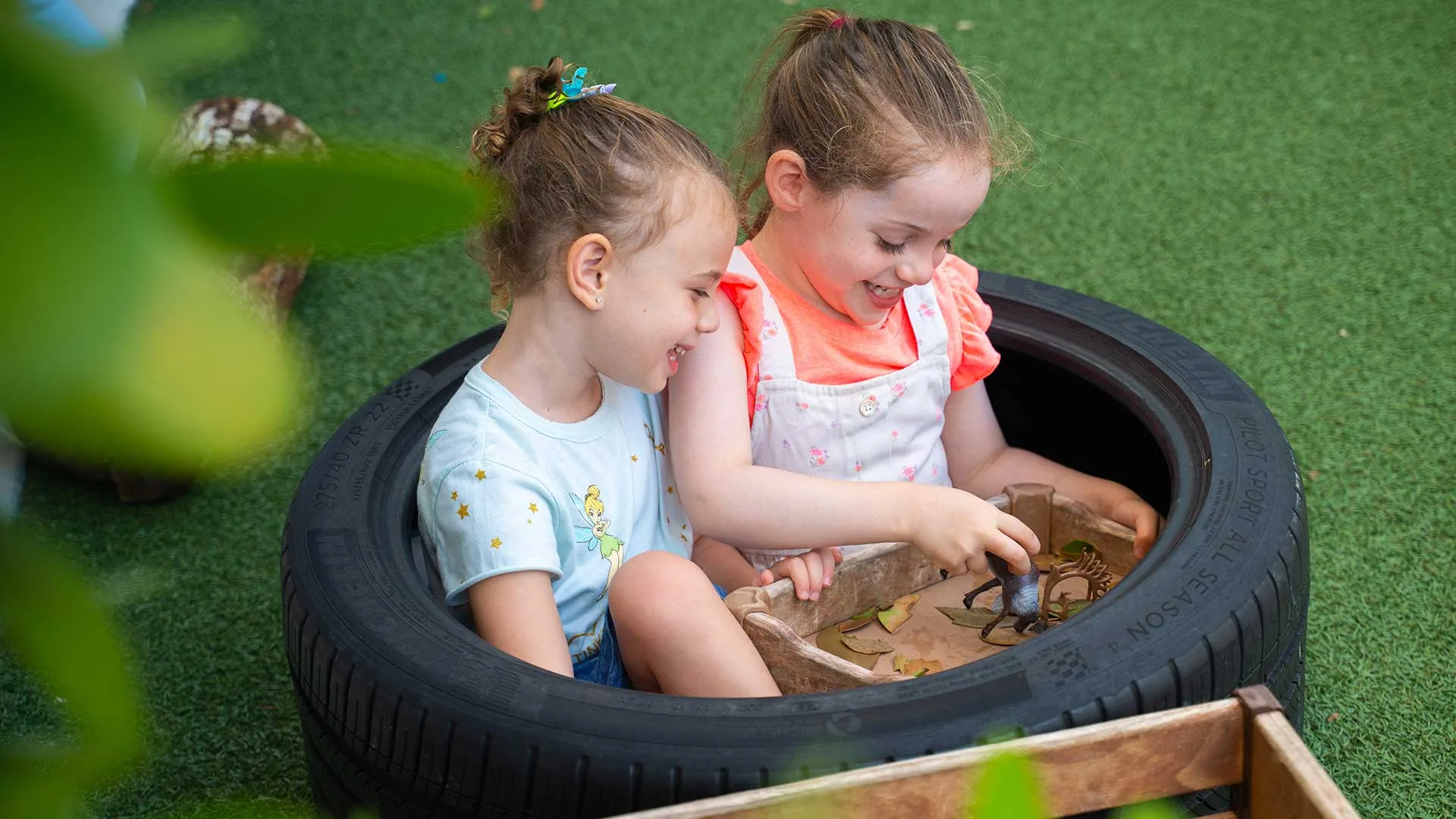
We see children as capable thinkers, problem-solvers, and active participants in their own learning. We value their ideas and perspectives, create opportunities for meaningful choices and contributions, and trust children as capable partners in the learning process.
Learning Through Inquiry and Projects
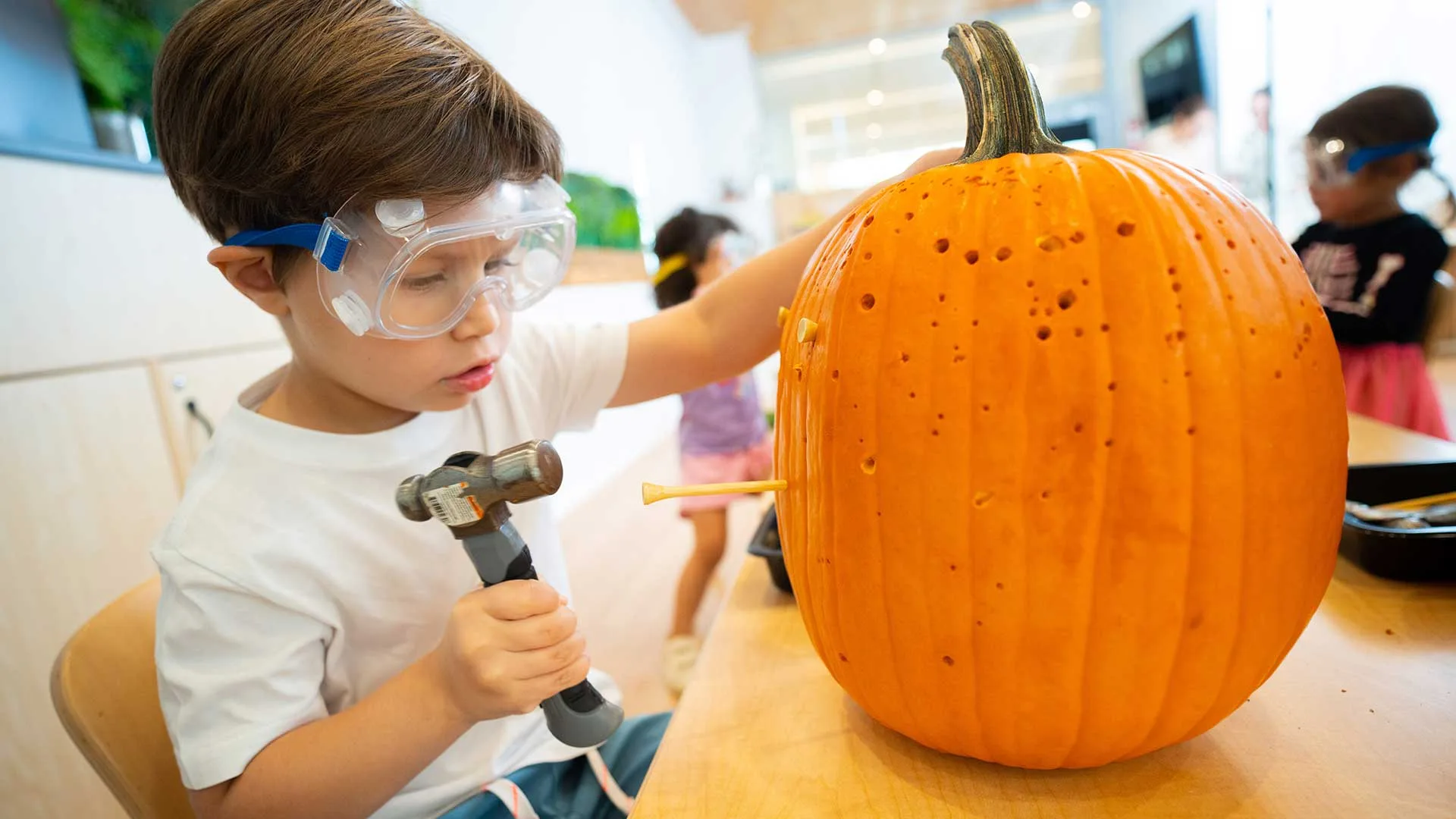
Children’s interests, questions, and theories can become the starting points for deeper investigations. Through project work, children explore ideas over time, experiment with materials, revisit their thinking, and make connections as their understanding evolves. Teachers use observation and documentation to help projects develop in meaningful and sometimes unexpected directions.
The Environment as a Teacher
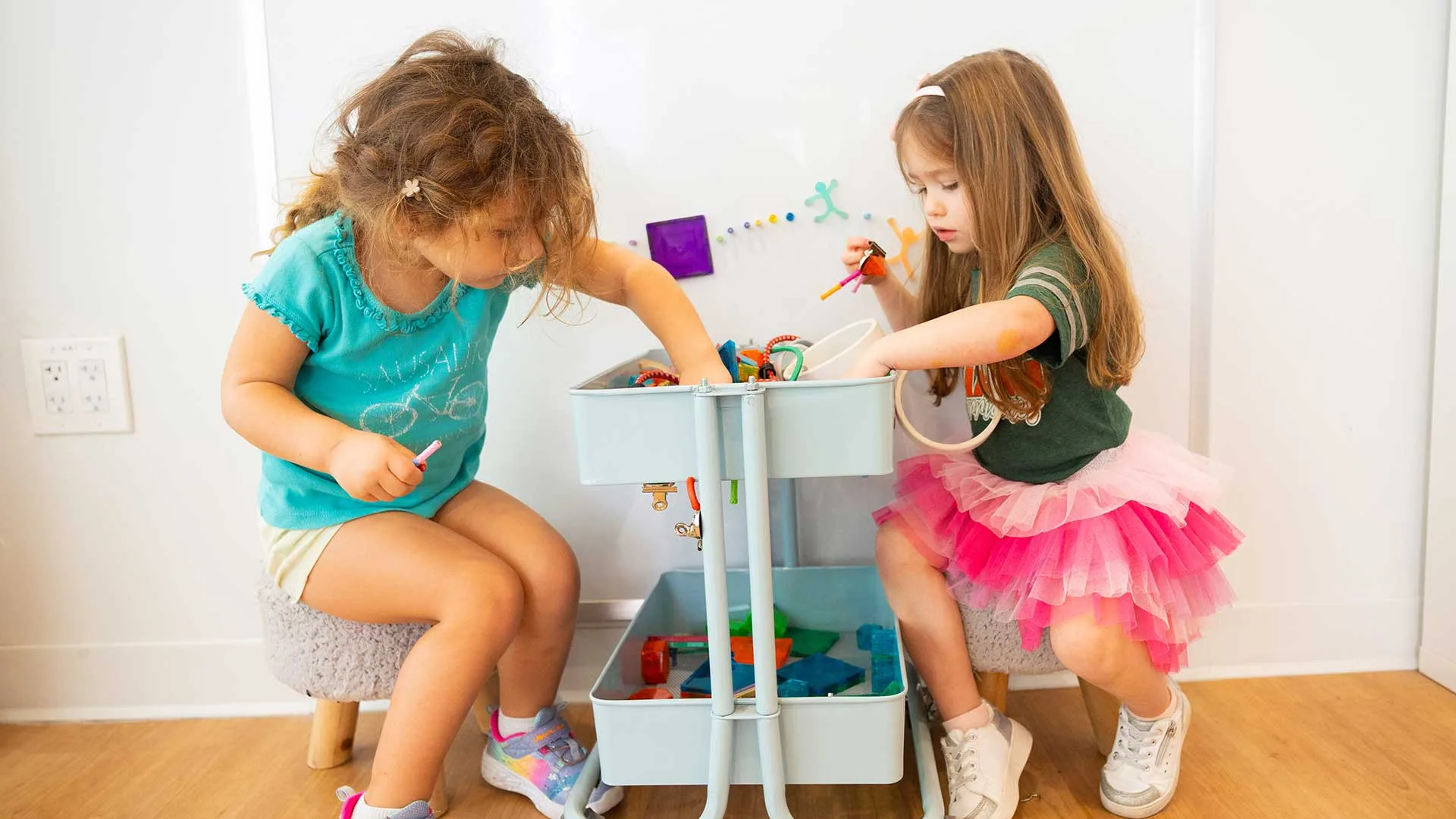
Our classrooms are thoughtfully designed to invite exploration, creativity, collaboration, and independence. Beautiful, open-ended materials and intentional provocations encourage children to wonder, experiment, and discover.
Teachers as Researchers and Learners
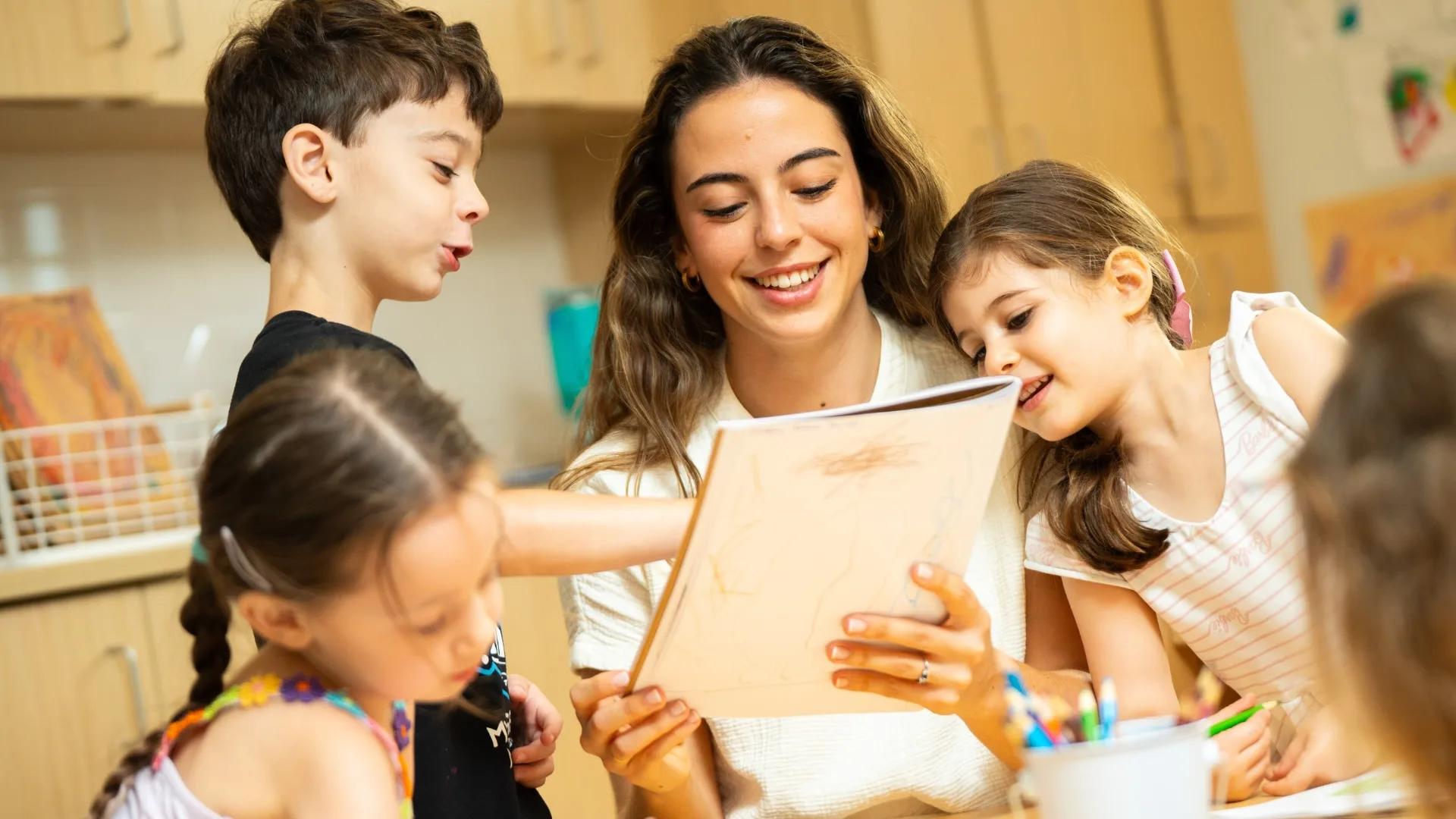
Our teachers observe closely, listen deeply, ask thoughtful questions, and follow children’s thinking. Rather than simply delivering information, teachers investigate alongside children and thoughtfully plan experiences that extend their learning.
Relationships and Community
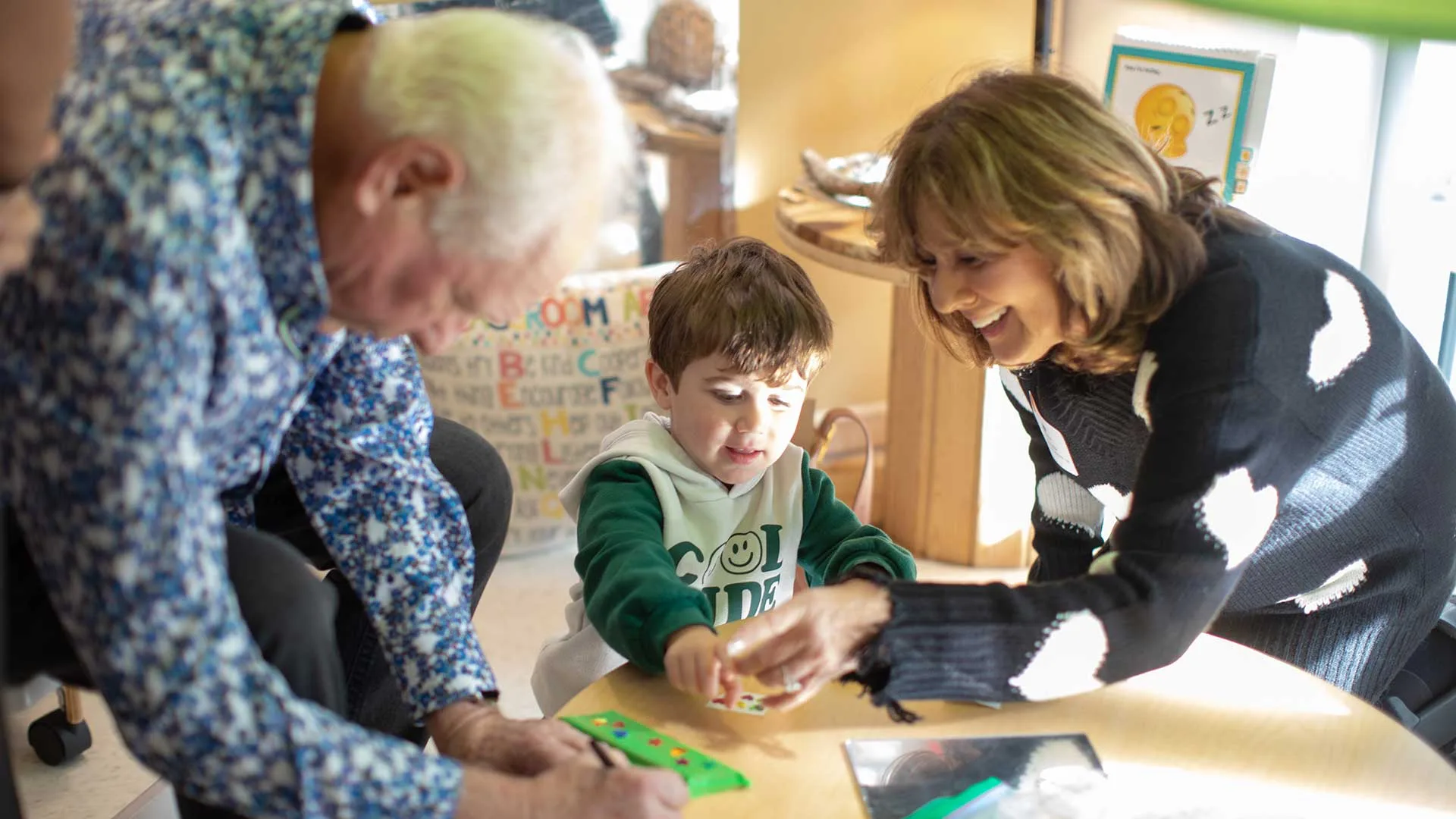
Learning grows through relationships with children, teachers, families, and the communities around us. We partner with families to know each child deeply and create a strong sense of belonging. As part of the Temple Beth Am community, children have opportunities to learn from and with others across our school and congregation. We also encourage children to notice, explore, and learn from the world beyond our campus, helping them discover that they are part of a larger community and can make meaningful contributions to it.
Making Learning Visible
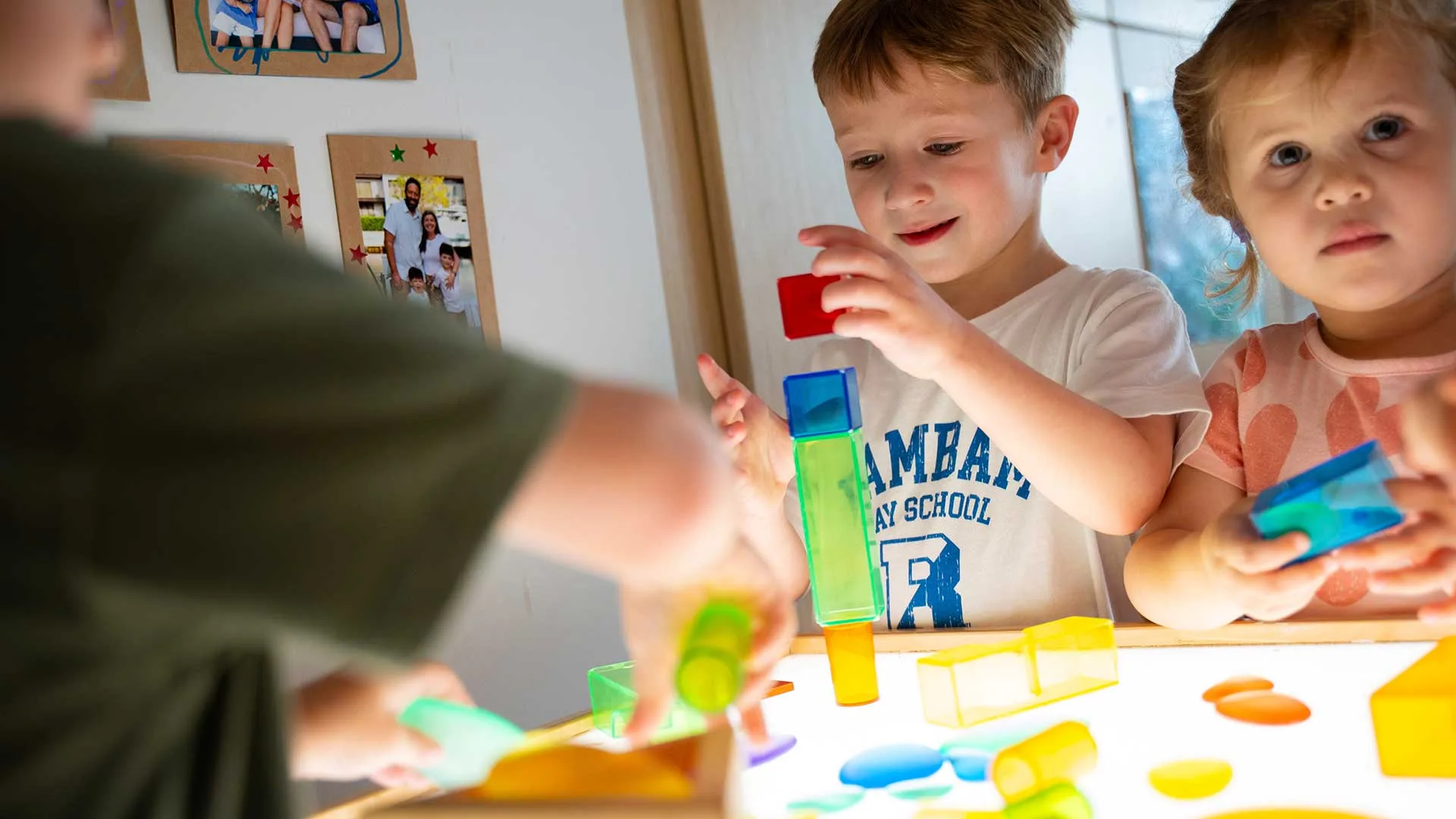
Through photographs, children’s words, artifacts, and other forms of documentation, we make children’s thinking and learning visible. Documentation helps children revisit their ideas, helps teachers reflect and plan, and gives families a window into their child’s experience.
Our Commitment to
Play-Based Learning
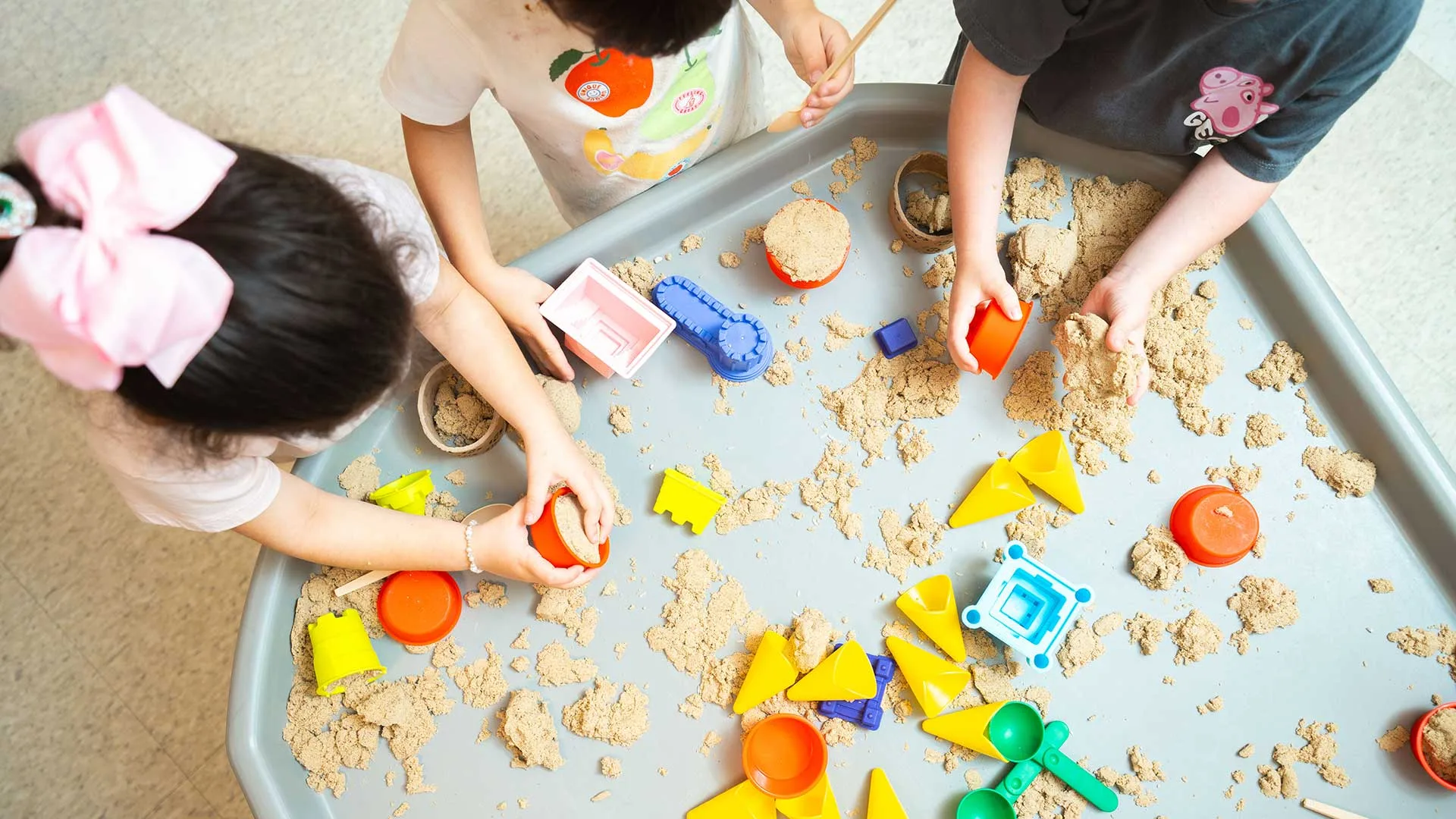
Play is at the heart of our Early Childhood program. Children build language, mathematical thinking, social-emotional skills, creativity, problem-solving, and independence through meaningful play and exploration.
Our teachers create environments where children can make choices, take risks, collaborate, experiment, and follow their own ideas. Learning is not separated from play; play is one of the ways children make sense of their world.
Our Jewish Values
Our Jewish values are woven into everyday life in the Early Childhood program.
- B’tzelem Elohim — Every person is created in the image of God.
- Kehillah — We are part of a caring community.
- Kavod — We treat ourselves, others, and our world with respect.
- Tikkun Olam — We have a responsibility to help make our world a better place.
Judaism is part of our everyday experience. Children encounter Jewish values, stories, traditions, holidays, songs, prayers, and mitzvot through meaningful, hands-on experiences.
Each Friday, our Early Childhood community comes together to celebrate Shabbat through music, prayer, candles, wine, and challah. Throughout the year, families are invited to join classroom Shabbat celebrations and participate in special traditions such as Shabbat reading and bringing Shabbat flowers.
Jewish holidays are celebrated throughout the year through experiences that invite children to explore, create, ask questions, and develop a joyful connection to Jewish life and community.

Our Age Level Programs
Across all age levels, literacy, mathematics, science, social studies, the arts, and other disciplines are naturally woven into children’s investigations and projects. Rather than teaching these areas in isolation, children encounter them as connected ways of exploring questions, developing theories, solving problems, and making meaning.
Our youngest learners experience the world through their senses, movement, relationships, and hands-on exploration. Children are invited to investigate open-ended materials such as clay, soil, water, paint, natural objects, and loose parts. They touch, manipulate, combine, observe, and discover what materials can do.
Teachers carefully observe children’s interests and create thoughtful invitations that encourage curiosity, communication, independence, and connection. Through everyday experiences and play, children begin to build relationships with their environment, their teachers, and one another.
Two-year-olds are natural explorers with strong ideas and a growing desire to understand the world around them. Projects begin to emerge from children’s interests, discoveries, questions, and fascinations. A shared interest can become an opportunity to observe, investigate, create, build, represent, and revisit ideas together.
Teachers listen closely to children’s thinking and use their observations to extend investigations with meaningful materials, experiences, and questions. Children begin to see that their ideas matter and that they can be researchers, creators, and contributors to their classroom community.
Three-year-olds are full of theories about how the world works. Their questions, observations, and interests become the starting point for investigations that can unfold over months or longer. Children draw on a rich range of resources and experiences, including classroom investigations, field trips, materials, books, and visits from community members, to explore, represent, and deepen their ideas.
Teachers listen closely and observe children’s thinking, using documentation to make their ideas visible and help shape what comes next. As projects develop, children revisit their theories, encounter new possibilities, and learn alongside one another. The classroom becomes a place where children’s questions are valued, and their ideas can take the investigation in unexpected directions.
Four-year-olds are increasingly intentional researchers, collaborators, and thinkers. Their questions and theories can lead to rich, sustained investigations in which children observe closely, gather information, experiment with materials, represent their thinking, and return to ideas again and again.
Teachers act as researchers alongside the children, documenting conversations, questions, discoveries, and evolving theories. Children are invited to revisit their thinking, listen to different perspectives, make connections, and contribute to a project’s direction. Through this process, children develop greater independence, confidence, and a deeper understanding of themselves, one another, and the world around them.
Accreditation and Licensing
The Early Childhood program is accredited by the National Association for the Education of Young Children (NAEYC). This prestigious national organization in early childhood learning provides information linking educational practices to current educational research. Having achieved NAEYC accreditation and the Florida Gold Seal of Excellence, our curriculum and classrooms reflect these developmentally appropriate guidelines. Approximately 7% of the nation’s early childhood programs maintain this designation.
Rambam Day Schools’ Early Childhood program is also licensed by the Florida Department of Children and Families: C11MD055