November 2026 / Kislev 5787
From Nora’s Desk:
Reflections from the Head of School
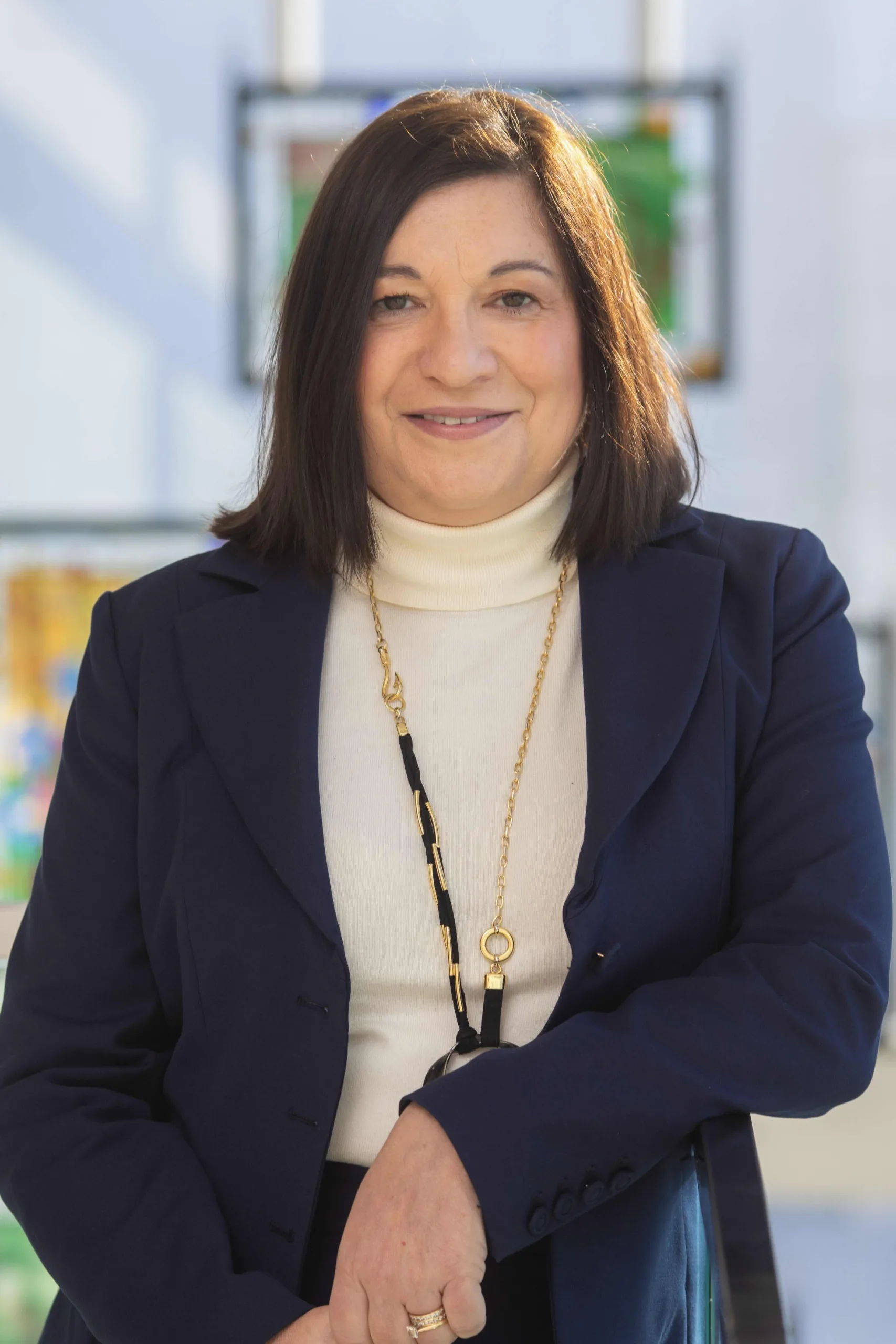
The past month has been packed with meaningful moments, joyful celebrations, and lots of learning woven into everything we did.
Our fall book fair was a huge success! We loved exploring new books, getting excited about reading, and meeting authors Susan Rose and Silvia López. Students even kicked off the week dressed as their favorite literary characters. A big thank-you to PATIO, our book fair chairs, and all the volunteers who helped make this week so special!
Rambam Day School’s Week of Giving is coming up after the break, taking place on December 7–11. This week-long initiative will support our school’s Annual Fund. This year’s theme, “Be the Light: Illuminate Our Future,” celebrates the impact each family can make. During this week, contributions directly support teacher development, facility improvements, security, and enhanced programming, critical investments that help our school continue to shine. All donors, at any level, will be recognized on campus as part of our community celebration of giving. I invite you all to participate!
As we look ahead to Thanksgiving, our middah of the month, hakarat hatov (gratitude), encourages us to recognize and appreciate the good in our lives. We are especially thankful for our families and for the love, wisdom, and support that grandparents bring to our children’s lives. We are also grateful for the creation of our new Grandparents Association, which offers new opportunities to bring generations together and welcome grandparents into the everyday life of our school. Throughout the month, we will encourage our students to reflect on the people they are thankful for and find thoughtful ways to express their appreciation.
As we enter this season of gratitude, we wish all of our families a happy, meaningful Thanksgiving.
Shabbat Shalom!
Middah of the Month
הַכָּרָת הַטּוֹב (Hakarat Hatov) Gratitude
Let’s think about our actions and be accountable to our community
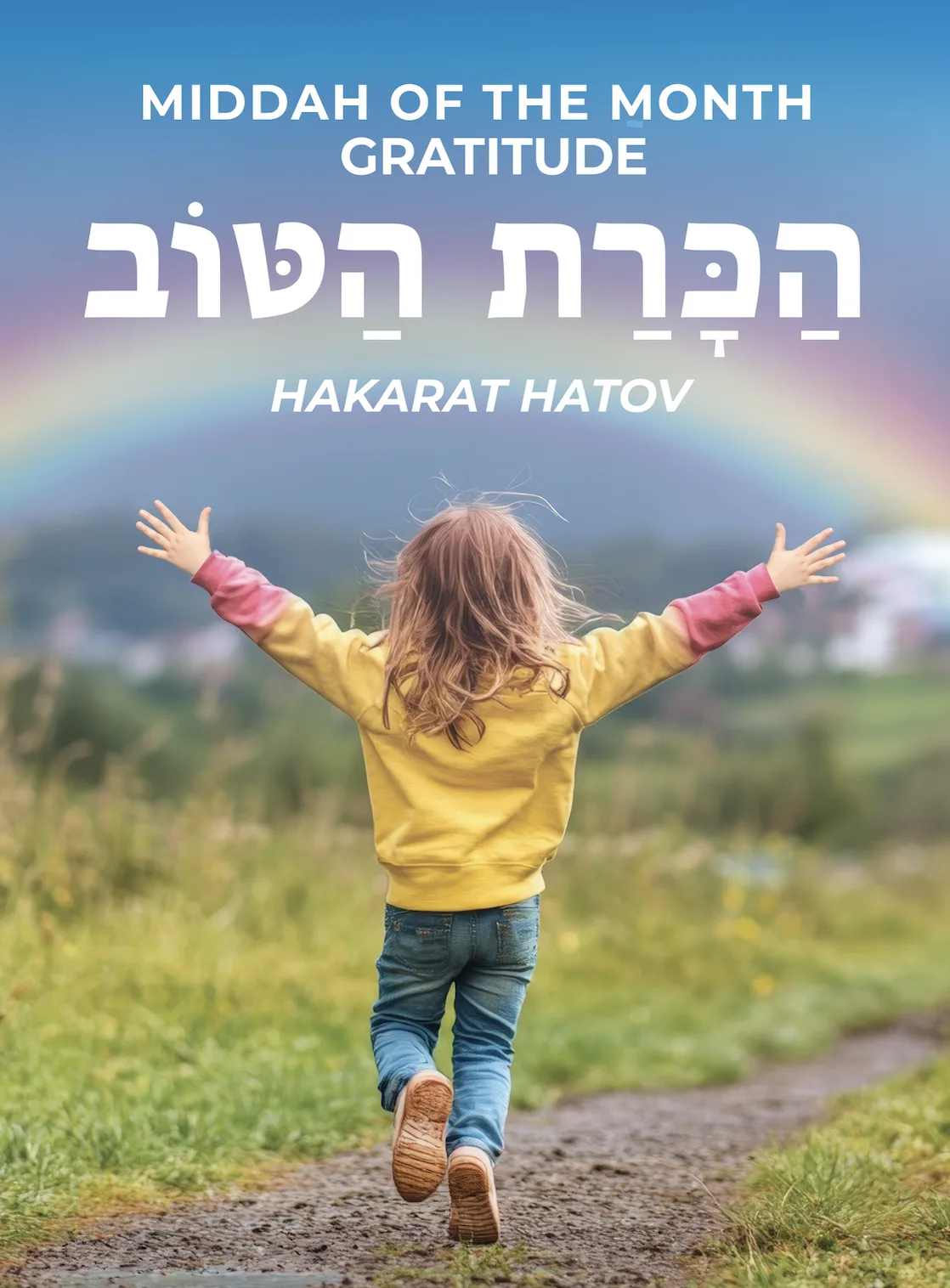
This month, our students will focus on the middah of Hakarat Hatov (gratitude), which literally means “recognizing the good.” Through this middah, students will explore the importance of noticing and appreciating the good in others, in themselves, and in the world around them. Rather than focusing on what we do not have, hakarat hatov encourages us to recognize the many things that enrich our lives and bring meaning to our everyday experiences.
Through meaningful conversations, classroom activities, and everyday interactions, students will learn that gratitude goes beyond simply saying thank you. It also means recognizing the value of the people, experiences, and even the small, ordinary moments that make our lives special. Jewish morning prayers, including Modeh Ani and Elohai Neshama, remind us to express gratitude for waking up, having a soul, and being able to breathe. These prayers help us understand that even the most basic parts of our lives are gifts worth appreciating. As students reflect on these teachings, they will discover how recognizing the good can bring more joy and positivity into their daily lives.
Rooted in Jewish teachings, hakarat hatov reminds us that gratitude and joy go hand in hand. Rebbe Nachman of Breslov teaches that gratitude welcomes joy and helps keep boredom and taking life for granted at bay. This month, students will practice noticing the good in their lives and expressing appreciation for it, even in moments they might usually overlook. Through reflection, they will consider questions such as, “What is something I am grateful for today?” and “How can I show someone that I appreciate them?” As students build the habit of recognizing and celebrating the good around them, they will strengthen their connections with others and cultivate a greater sense of joy, appreciation, and belonging within their community.
English Language Arts
Plot and POV with 3rd Grade
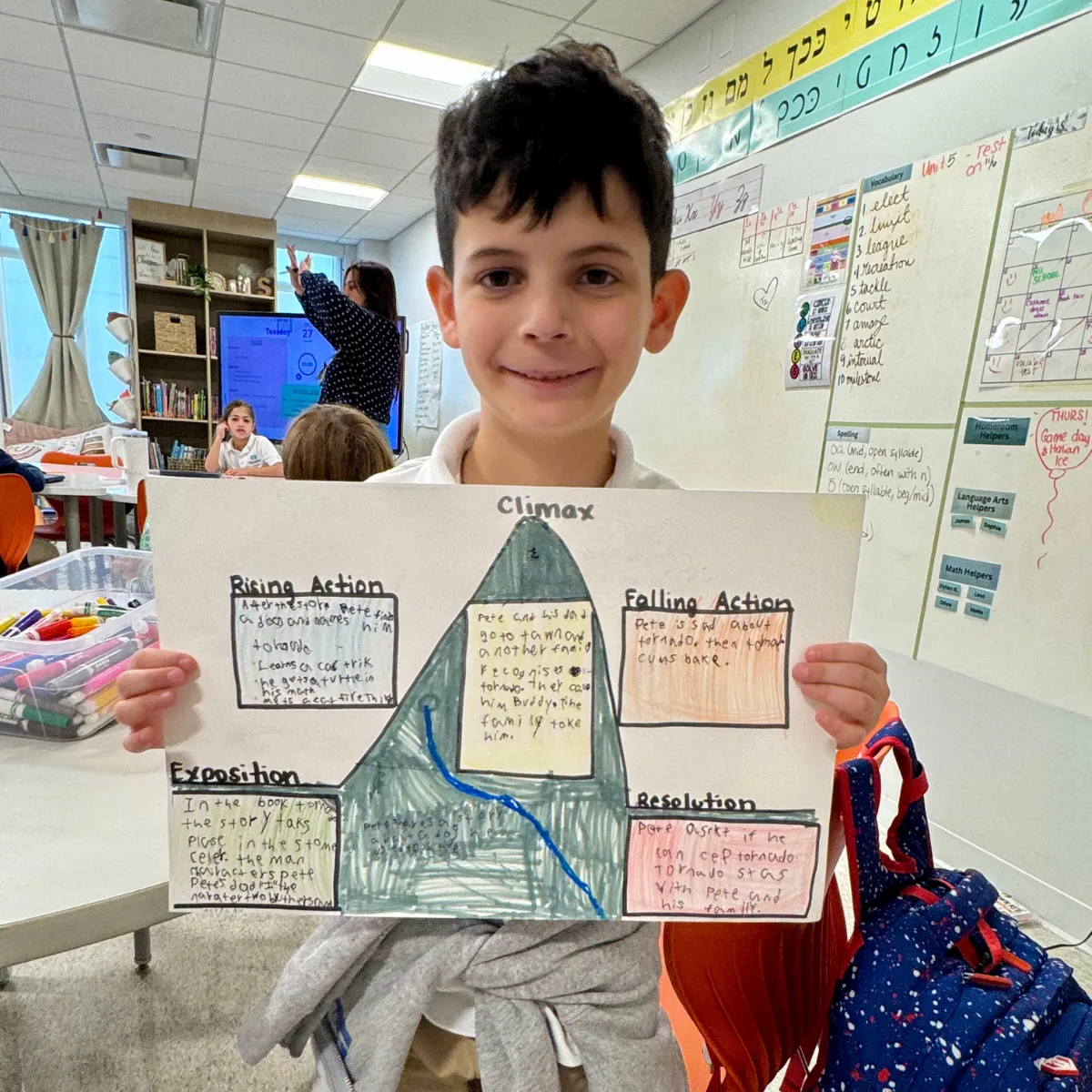
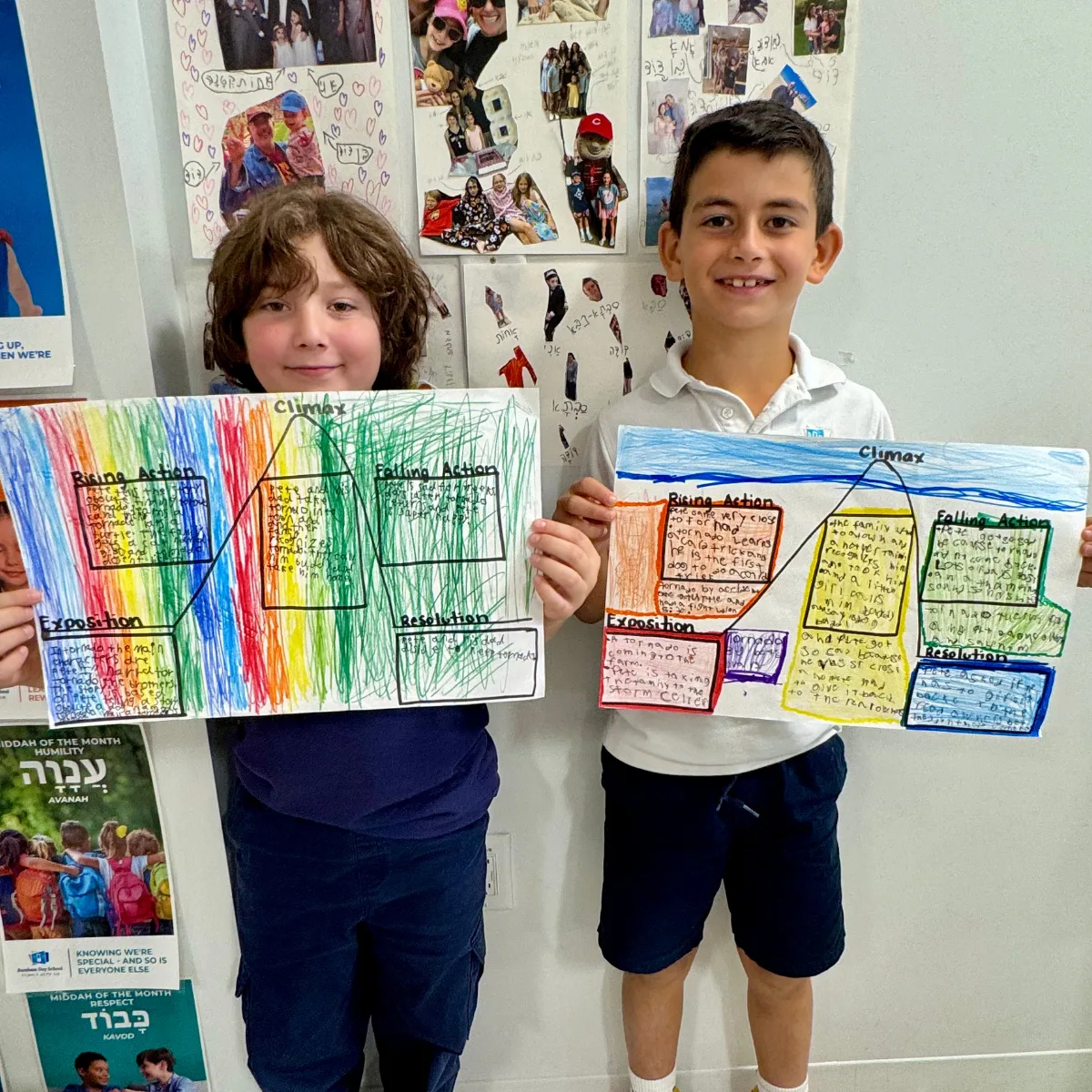
Our third graders recently completed their novel study of Tornado by Betsy Byars, exploring the elements that bring a story to life. Through reading, classroom discussions, and literary analysis, students examined plot structure and point of view, learning how an author organizes events and uses perspective to shape a reader’s understanding of a story.
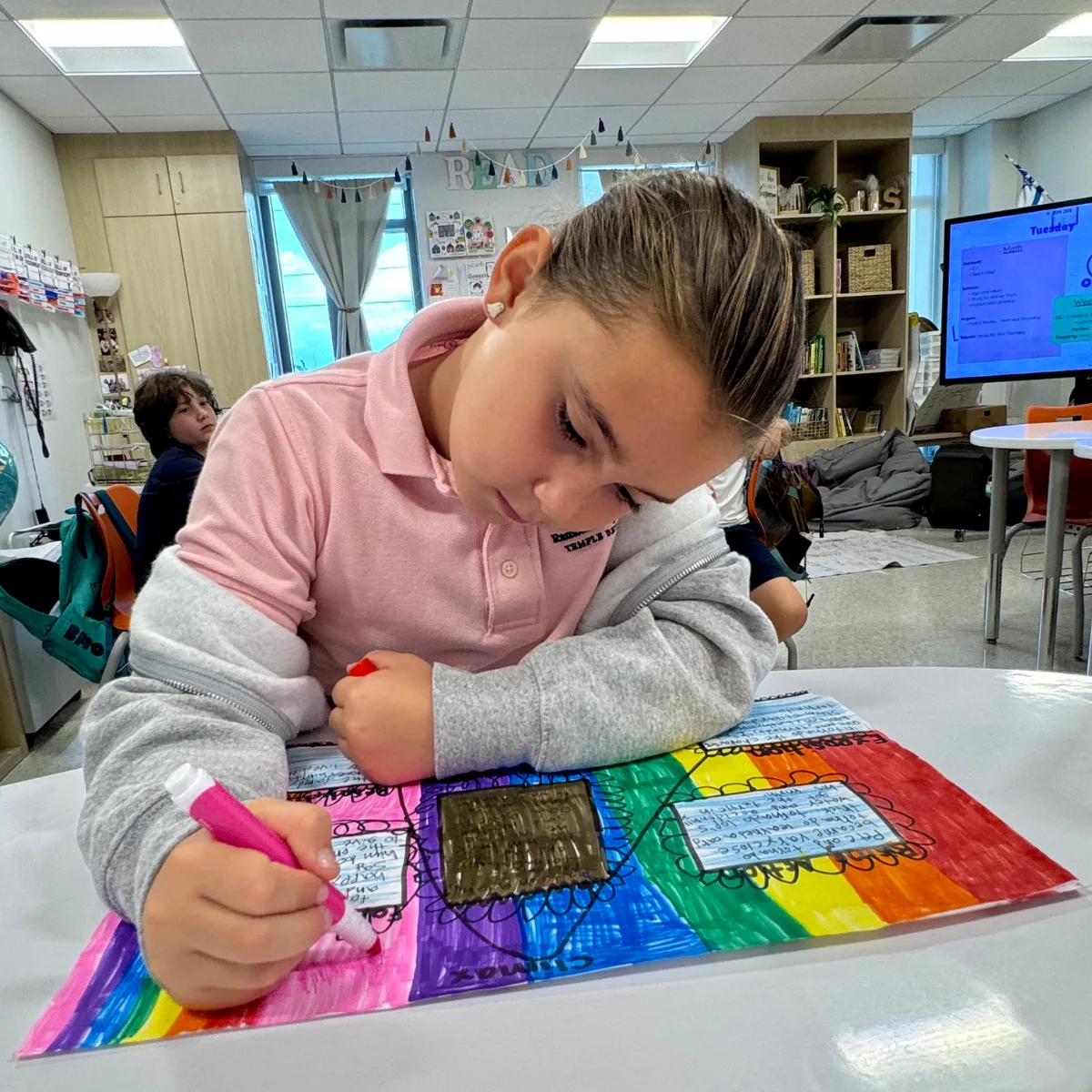
As part of their study, students created plot diagrams to map out the novel’s key events, identifying the exposition, rising action, climax, falling action, and resolution. This helped them better understand how a story develops, how events connect, and how an author builds suspense and brings a narrative to a close.
By examining these literary elements, students strengthened their reading comprehension, critical thinking, and analytical skills. Their work encouraged them to look beyond what happens in a story and consider how and why an author tells it, building a deeper understanding of storytelling and the choices writers make.
Mathematics
Counting, Creating, and Making Connections with Kindergarten
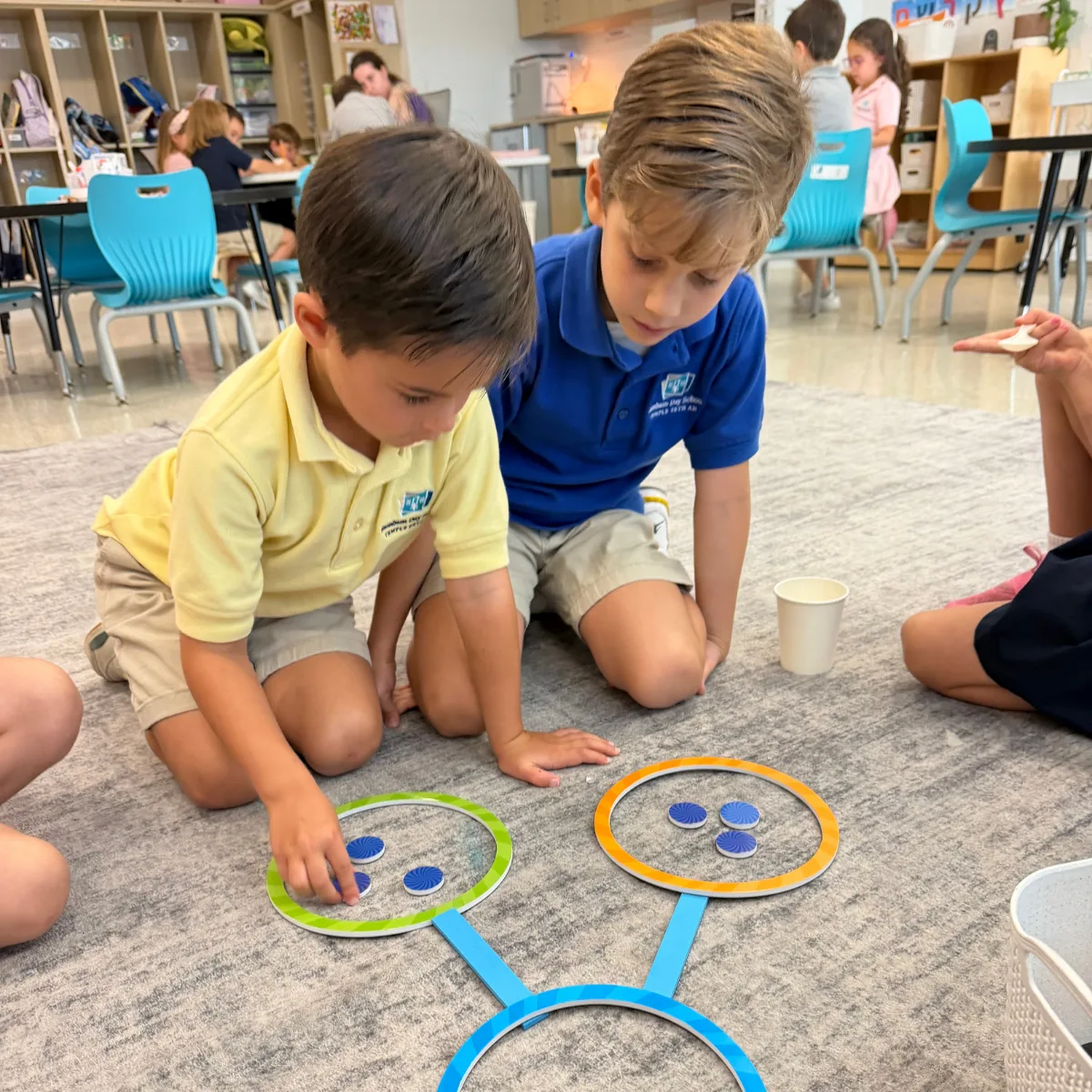
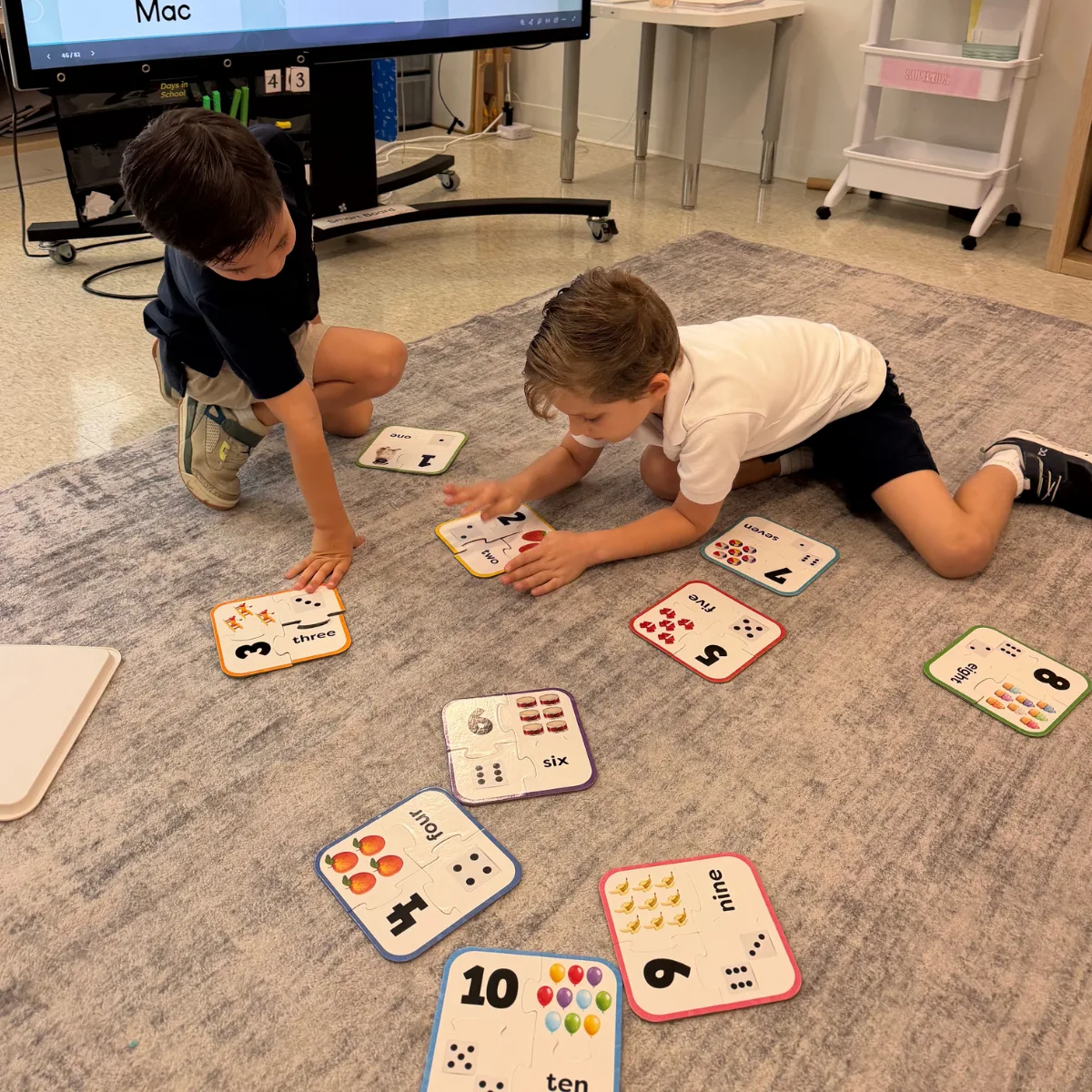
Our kindergarten students have been busy building their foundational math skills through hands-on activities focused on number sense, quantities, and two-dimensional shapes. Students are learning to recognize numbers, connect numerals to quantities, and identify shapes by examining their features.
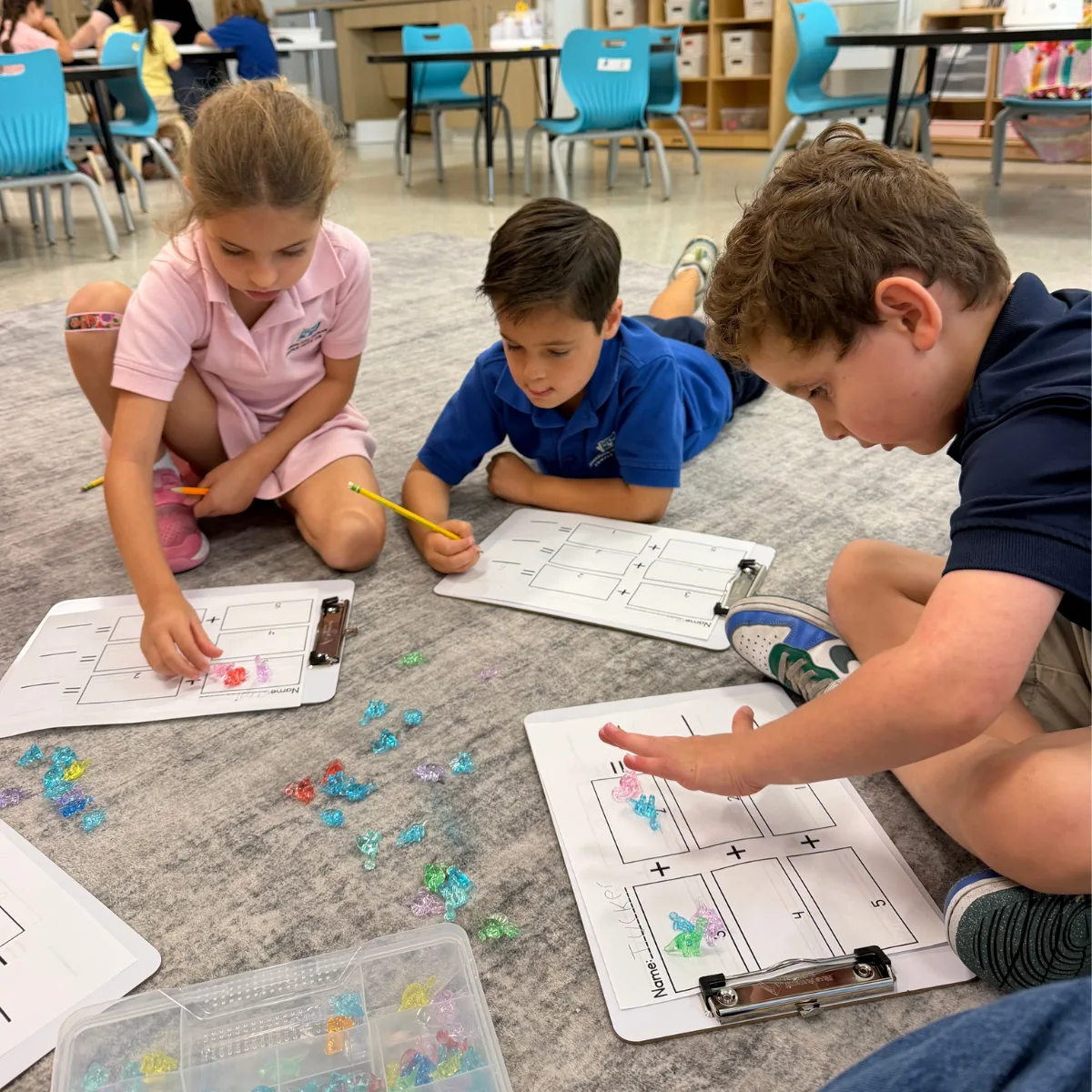
Using objects and manipulatives, students practice counting, comparing quantities, and representing numbers in different ways. Working with partners, they share ideas, explain their thinking, and explore different approaches to solving problems, strengthening both their mathematical understanding and collaboration skills.
Students have also begun exploring addition by combining groups of objects and counting to find the total. These hands-on experiences make abstract math concepts more concrete, helping students develop a deeper understanding of how numbers work together. Through these activities, our kindergarteners are building confidence in their math abilities while developing the critical thinking and problem-solving skills that will support their continued learning.
STEM SPOTLIGHT
The Science of Energy Transfers with 4th Grade
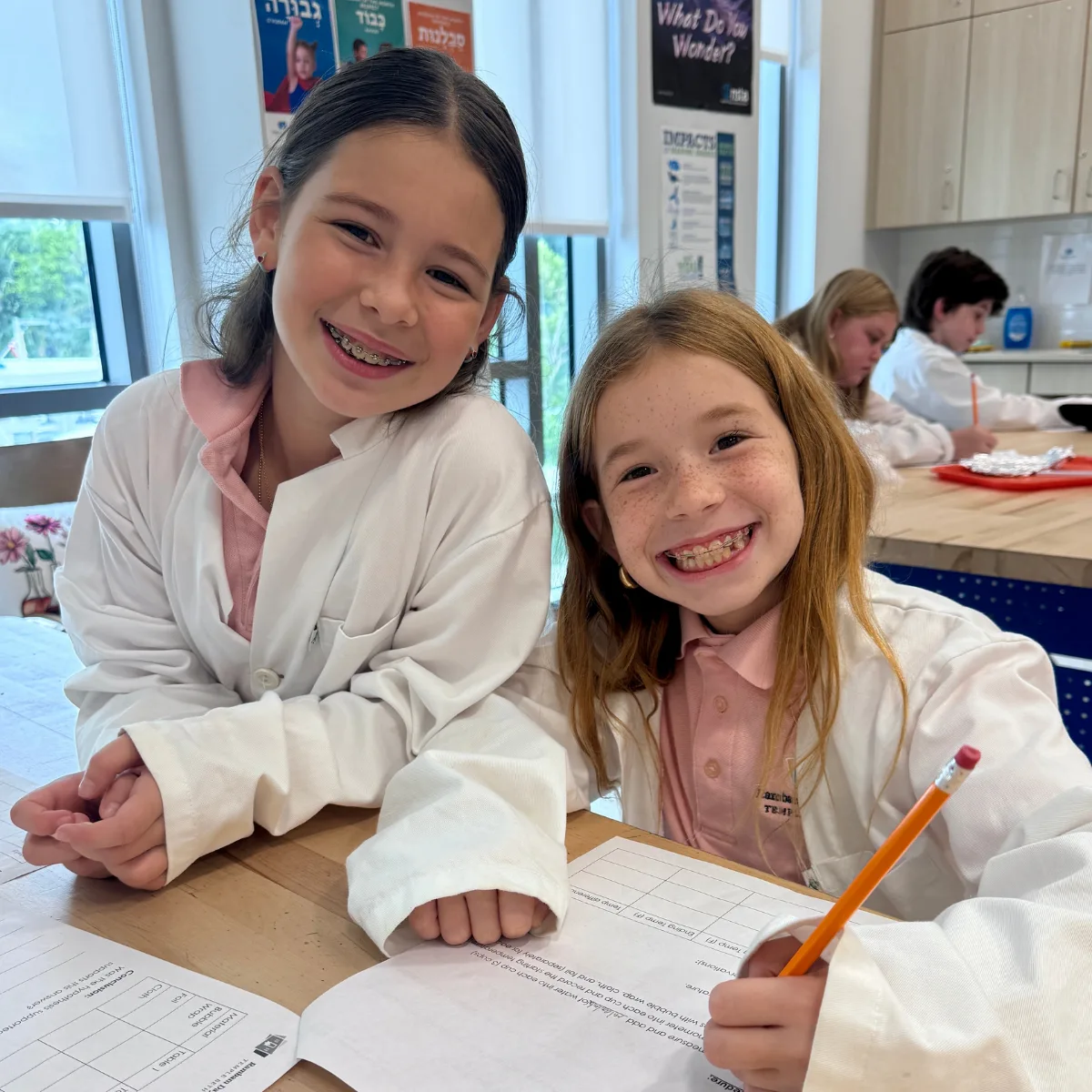
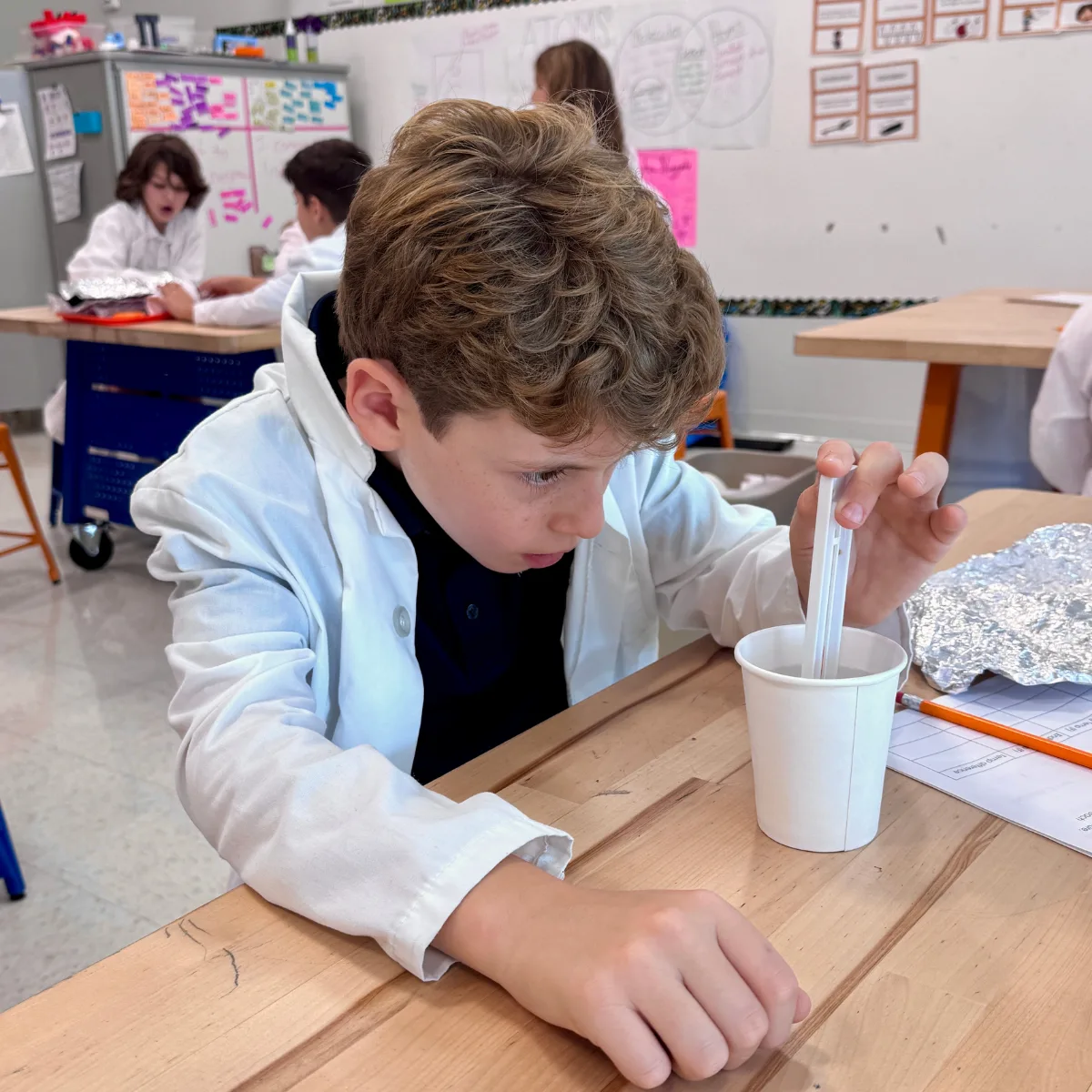
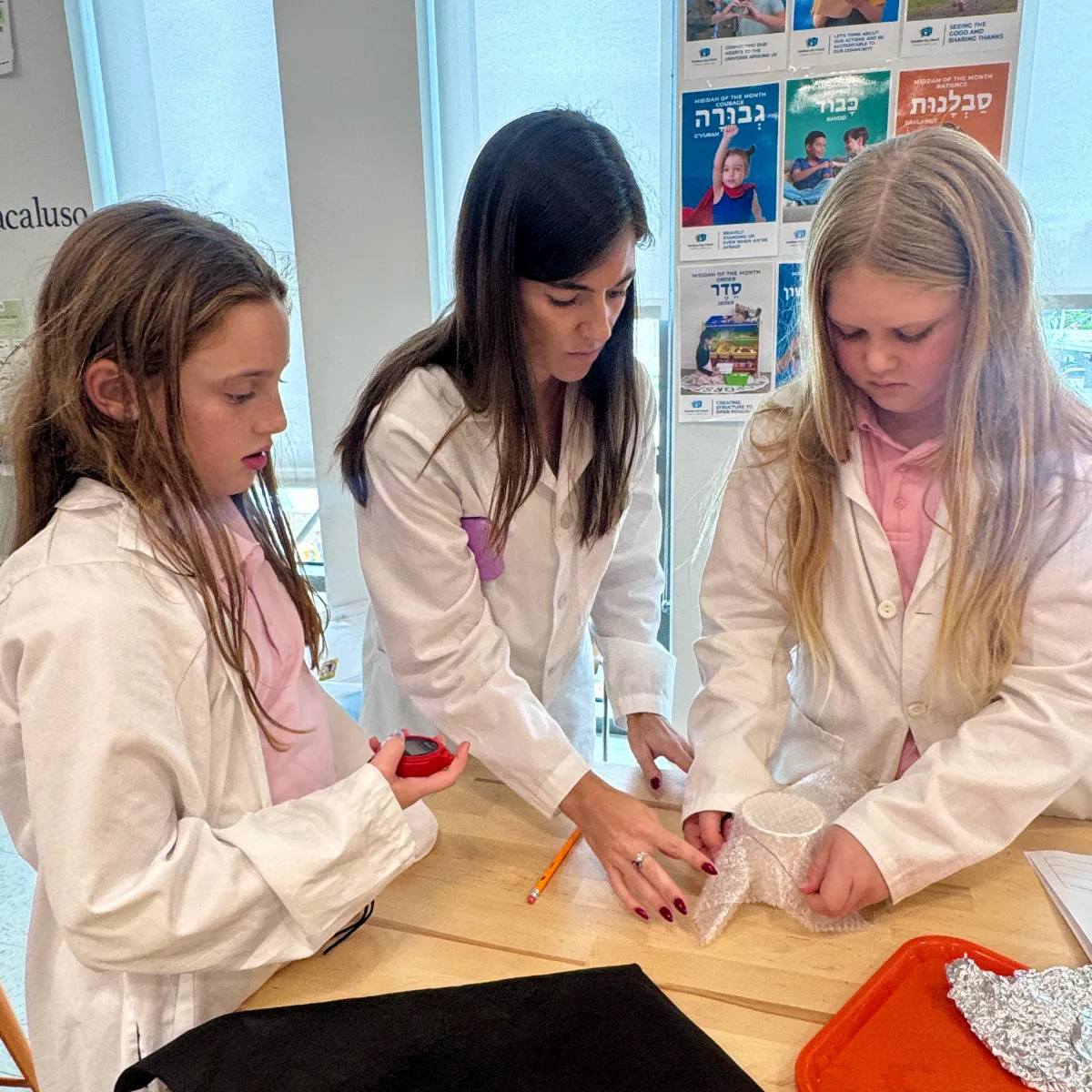
Our fourth graders have been exploring energy transfers, investigating how energy moves from one object to another and how it influences movement. Through hands-on experiments and creative challenges, students are putting scientific concepts into practice while developing their understanding of cause and effect.
As part of their study, students designed and built Rube Goldberg machines, creating a series of connected steps that demonstrate how energy can be transferred to set objects in motion. They also experimented with speed: making predictions, testing their ideas, and observing how different factors influence movement and the outcomes of their investigations.
Next, students will explore the properties of insulators and conductors, using experiments to test materials and observe how they interact with energy. Throughout these investigations, our fourth graders are strengthening their critical thinking, problem-solving, and scientific reasoning skills while gaining a deeper understanding of how energy works in the world around them.
Social Studies
Exploring Communities Around the World with 2nd Grade
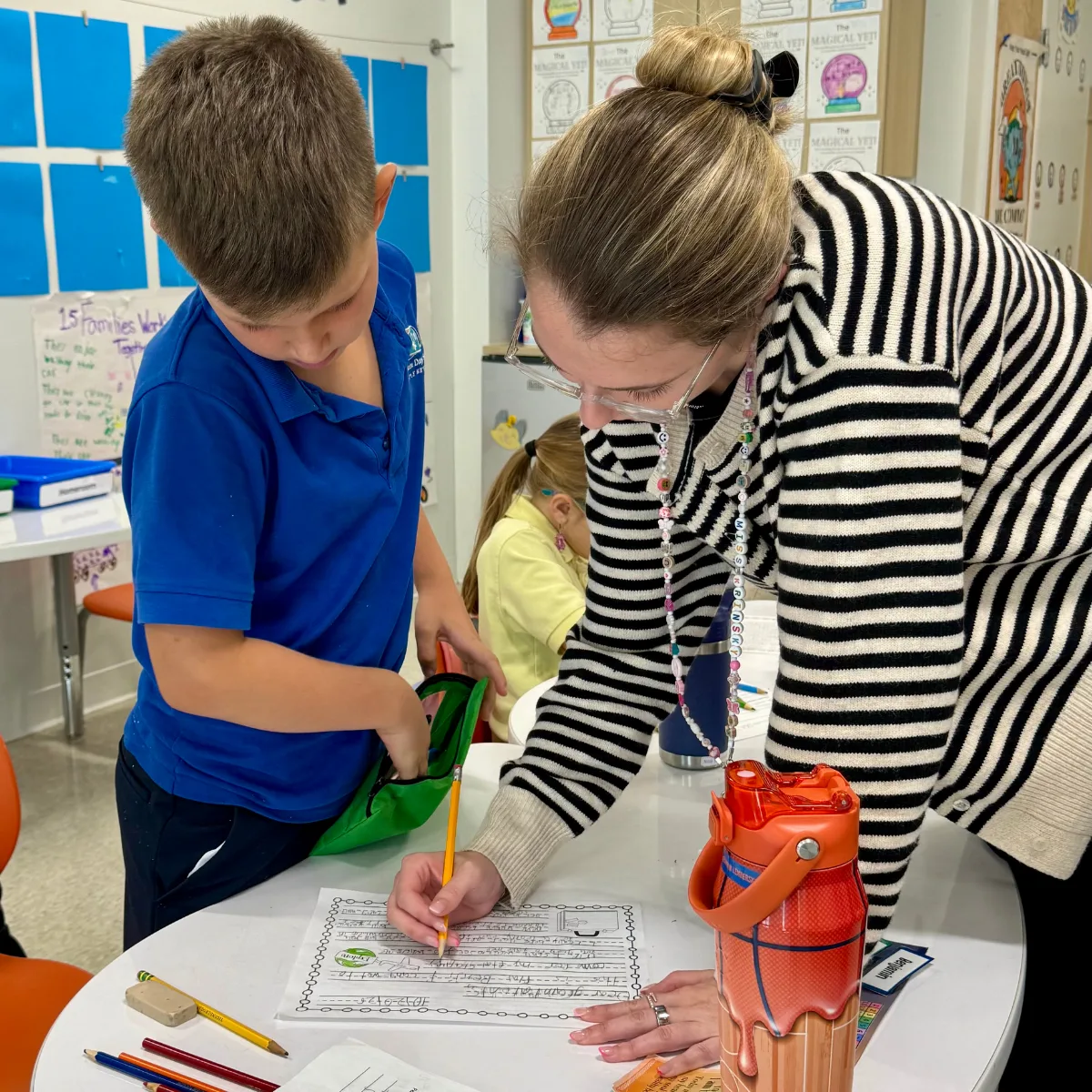
Our second graders are exploring geography and communities through their study of Flat Stanley by Jeff Brown. As they follow Stanley’s adventures, students are learning about different places, the people who live there, and how communities can be similar to or different from their own.
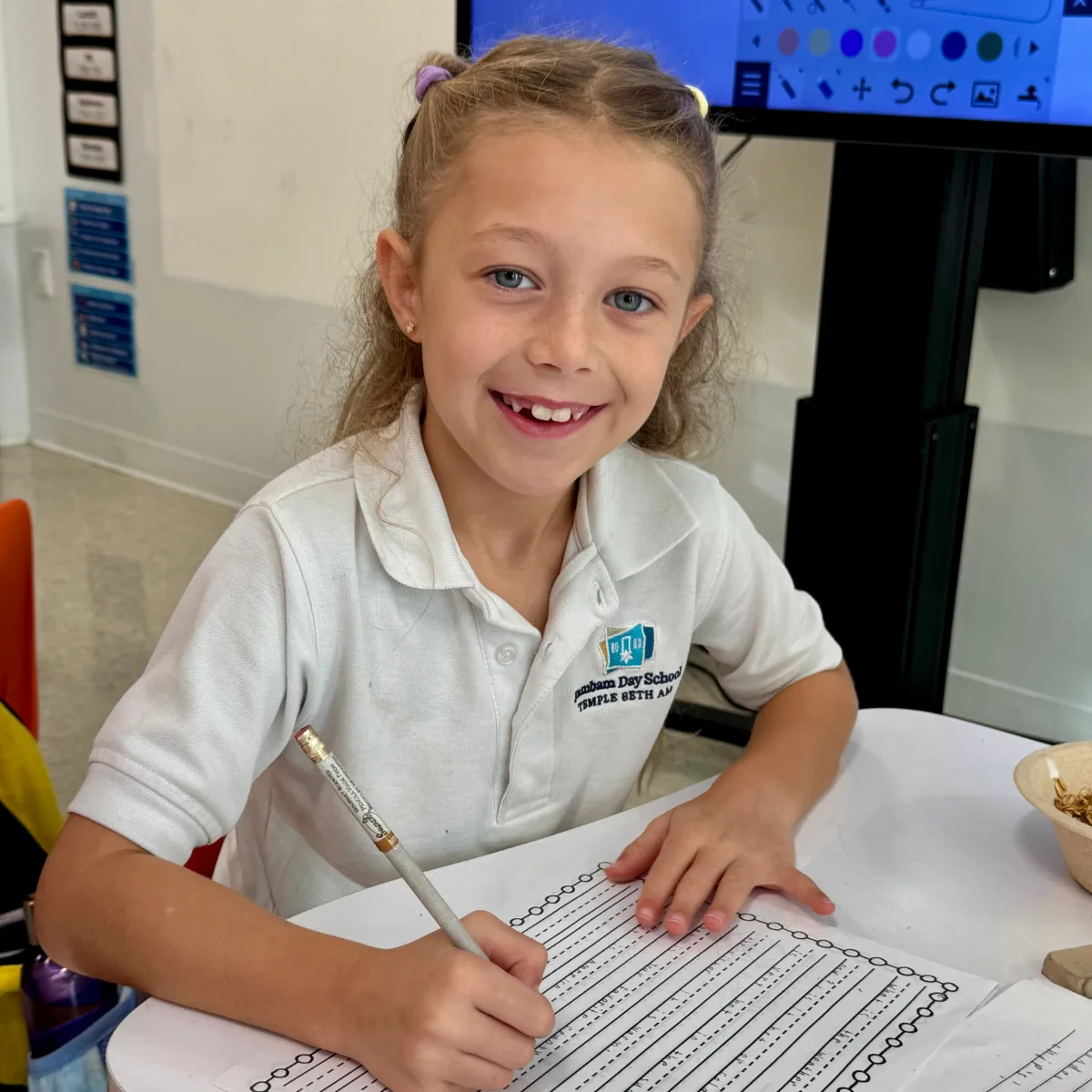
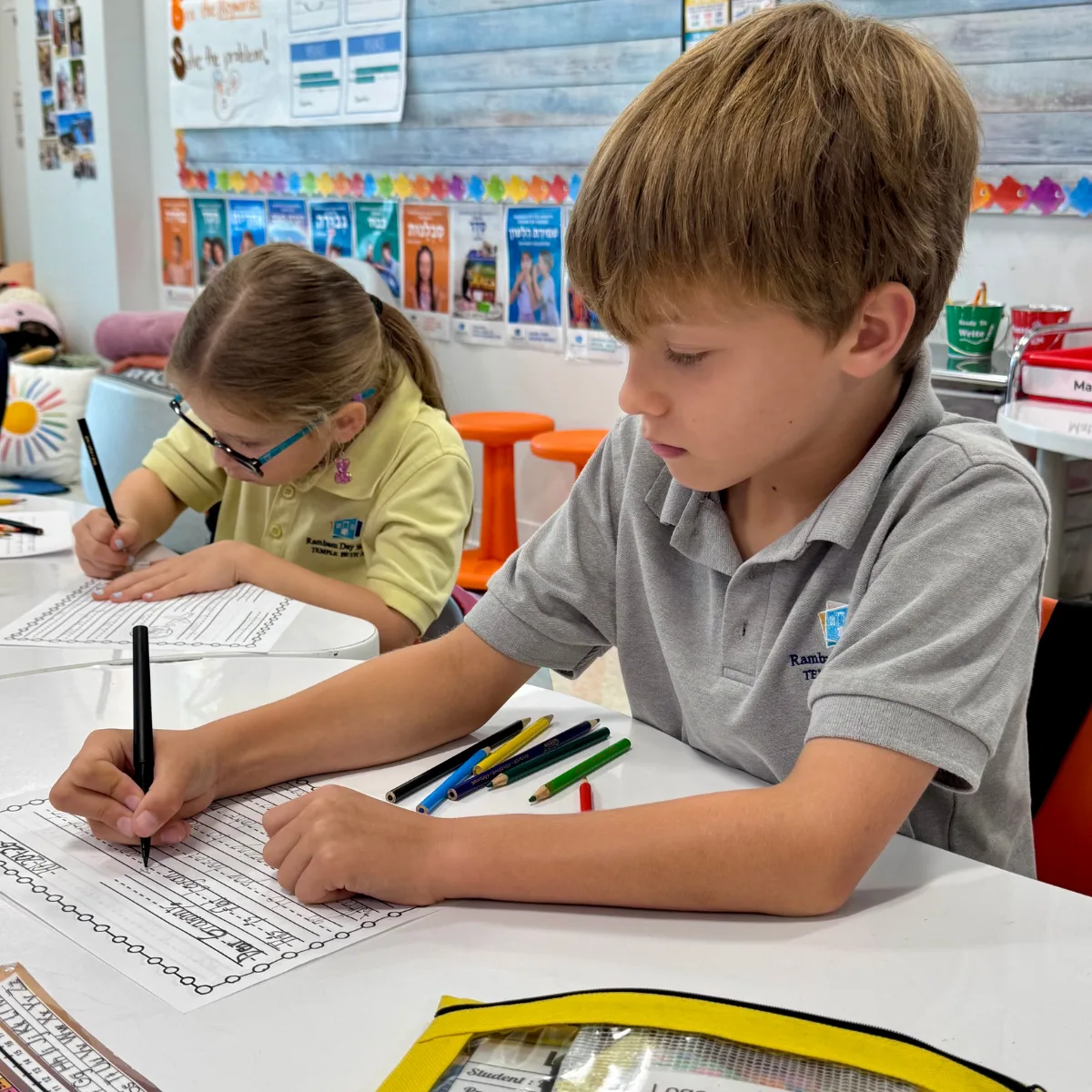
Inspired by the story, students wrote their own Flat Stanley letters, which they will mail to friends and family across the country. This activity brings together social studies and language arts, giving students an opportunity to practice writing skills such as sentence structure, spelling, and capitalization while making connections beyond the classroom.
As their Flat Stanley adventures unfold, students will learn more about different locations, traditions, and communities through the experiences of their friends and family. By connecting literature, writing, and geography, our second graders are strengthening their communication skills, expanding their understanding of the world around them, and discovering how learning can extend far beyond the classroom.
HEBREW
Vowels and Sounds with 1st Grade
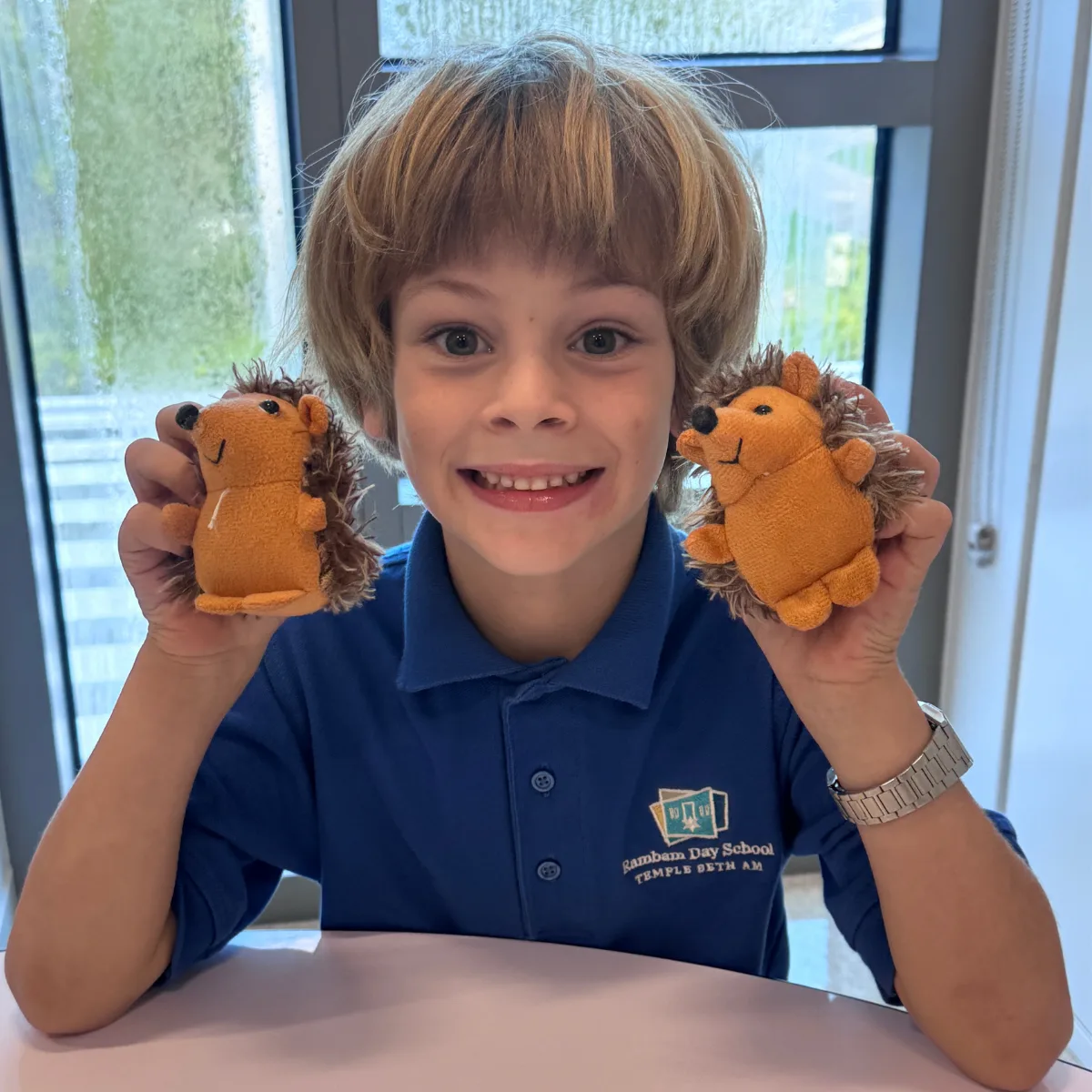
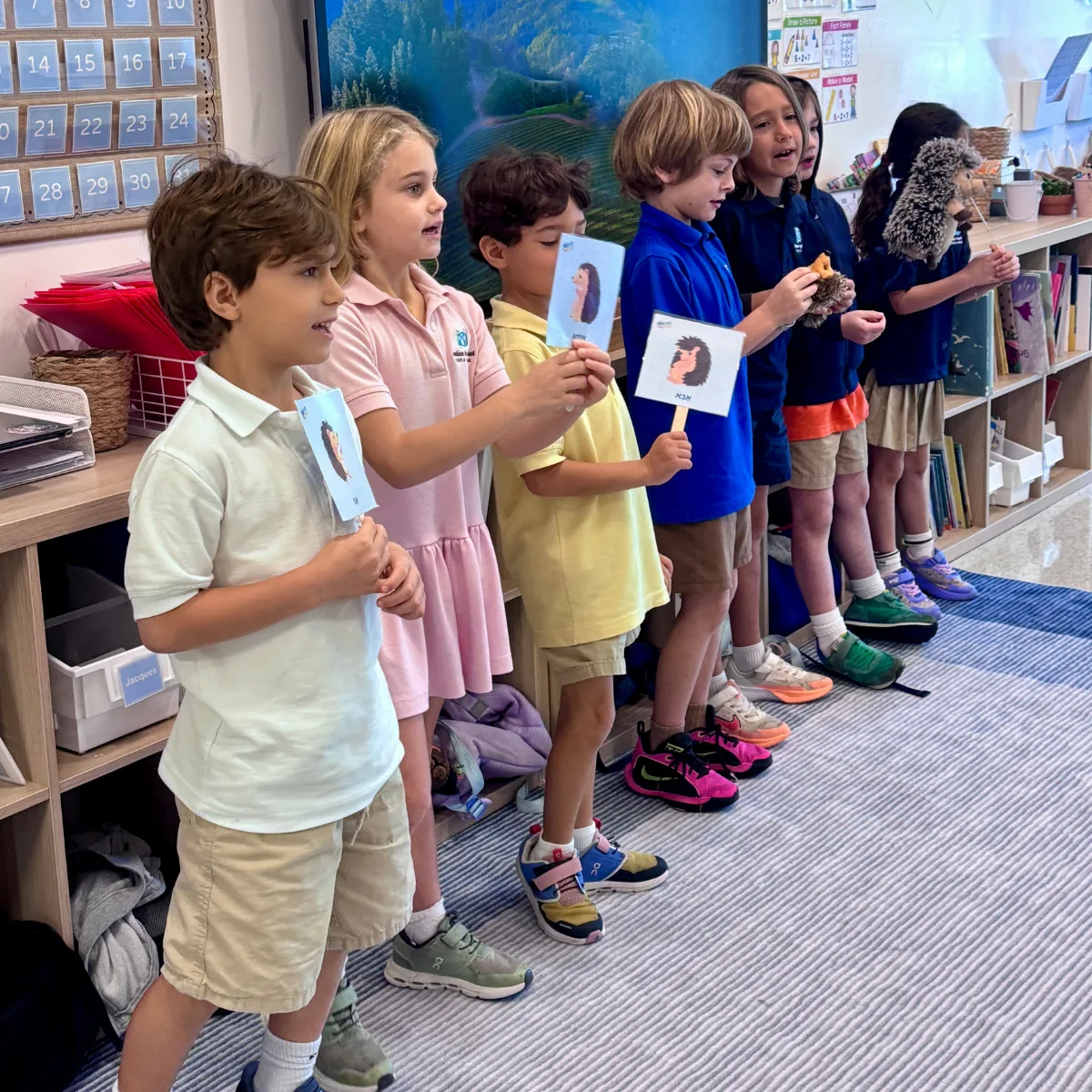
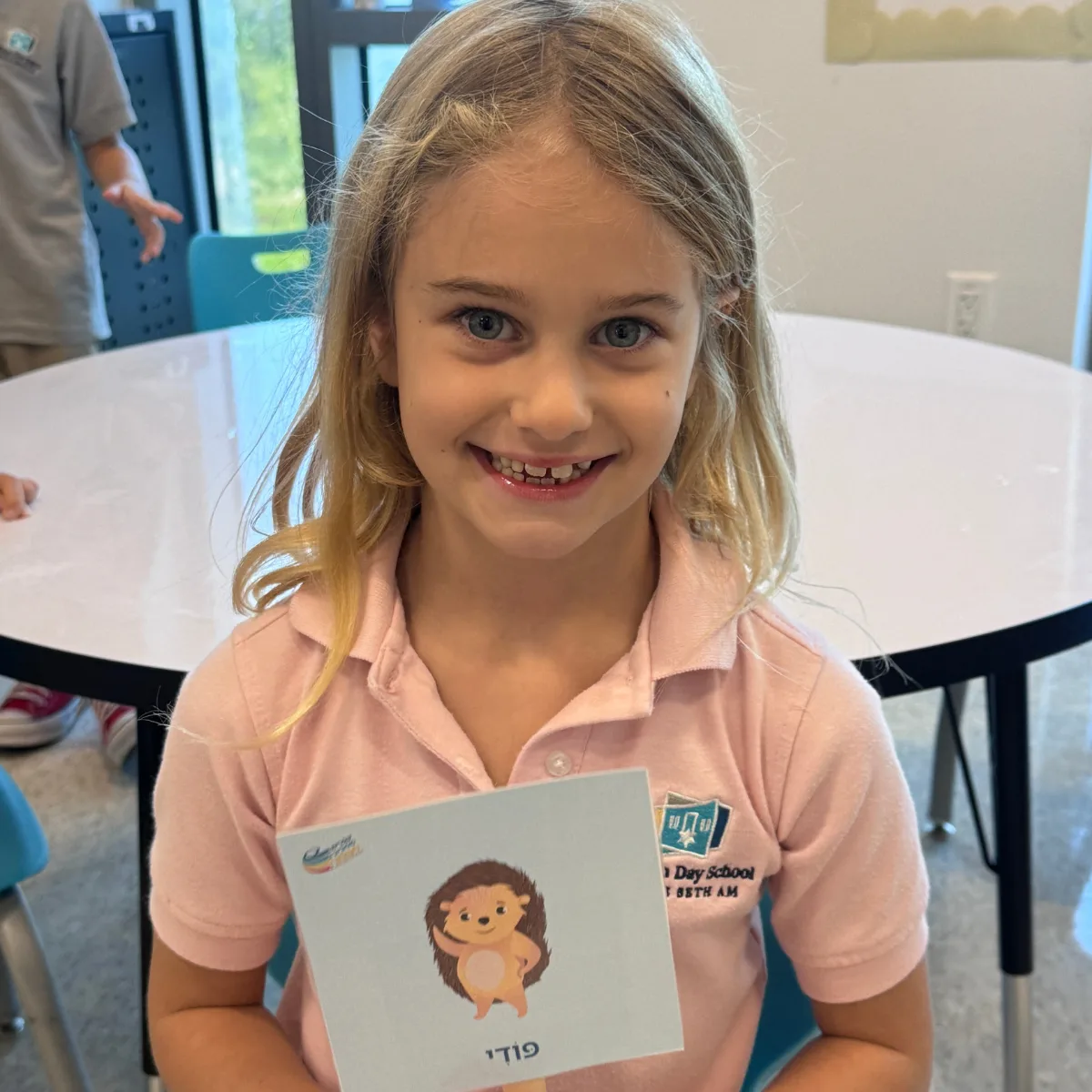
Our first graders are strengthening their Hebrew skills through a fun, interactive activity centered on vowels and sounds! Using a song about a hedgehog, students practice recognizing Hebrew vowel symbols, learning the sounds they make, and connecting each vowel to its role in pronunciation. This playful approach builds familiarity with Hebrew letters and sounds while making early reading engaging.
With vowel signs in hand and hedgehog stuffed animals by their sides, students hold up their signs as they sing. These visual cues help them connect each Hebrew vowel symbol to its corresponding sound, strengthening their understanding of how vowels work with letters to form the sounds they hear in Hebrew words.
Through this activity, our first graders are building an important foundation for Hebrew literacy. As they identify vowel symbols, listen for different sounds, and practice pronunciation alongside classmates, students develop the skills they need to begin reading Hebrew with greater confidence and independence.
ART
School of Fish Watercolor with
5th Grade
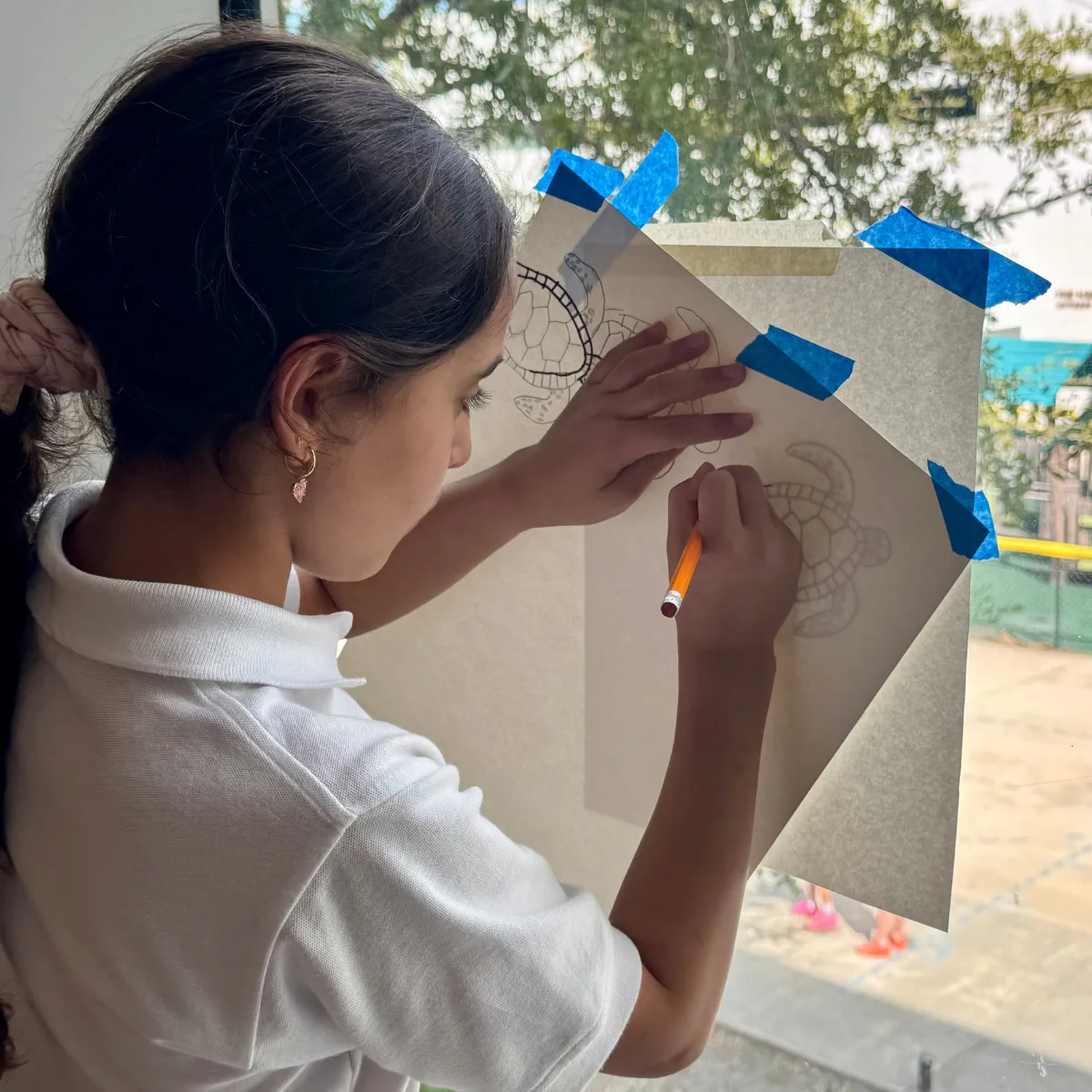
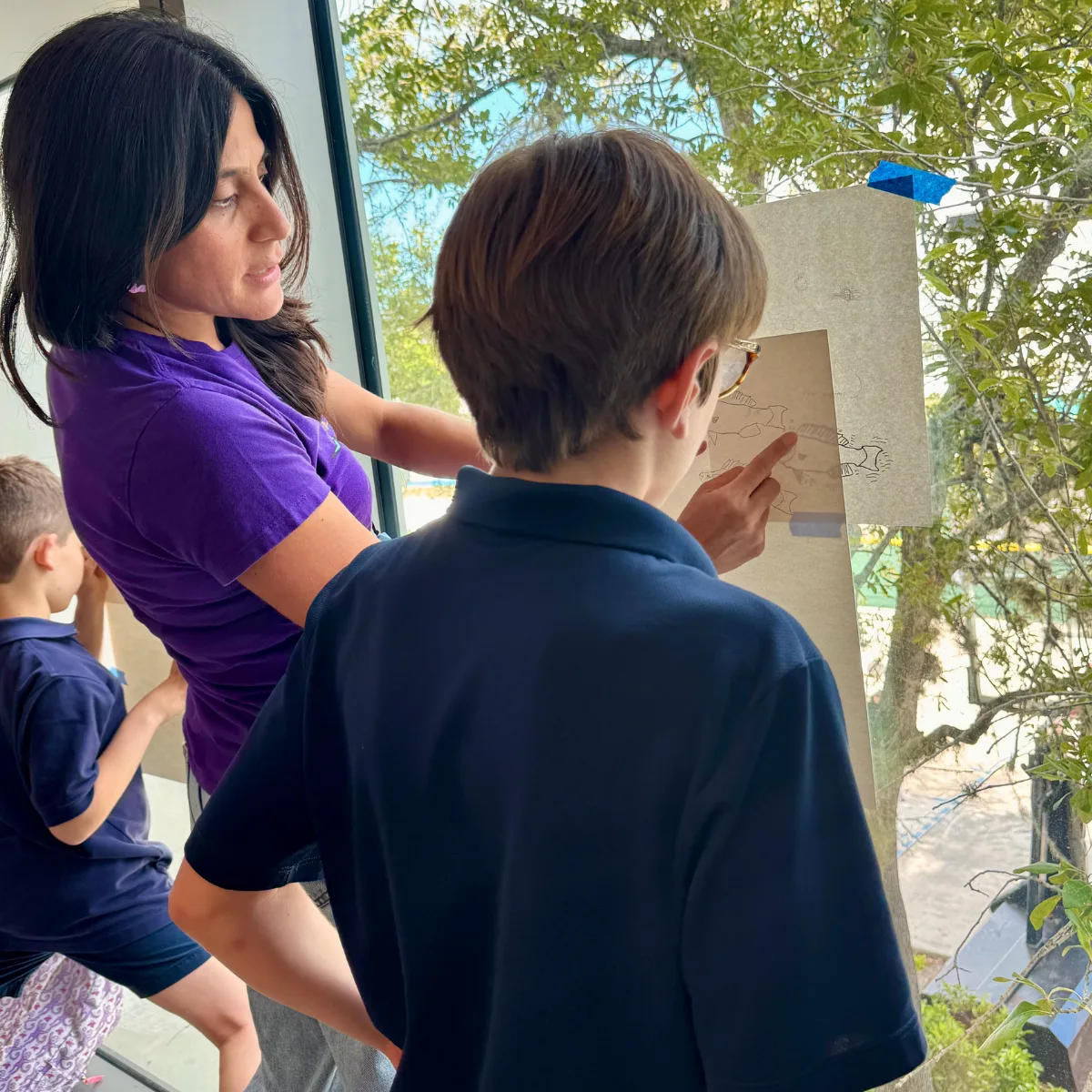
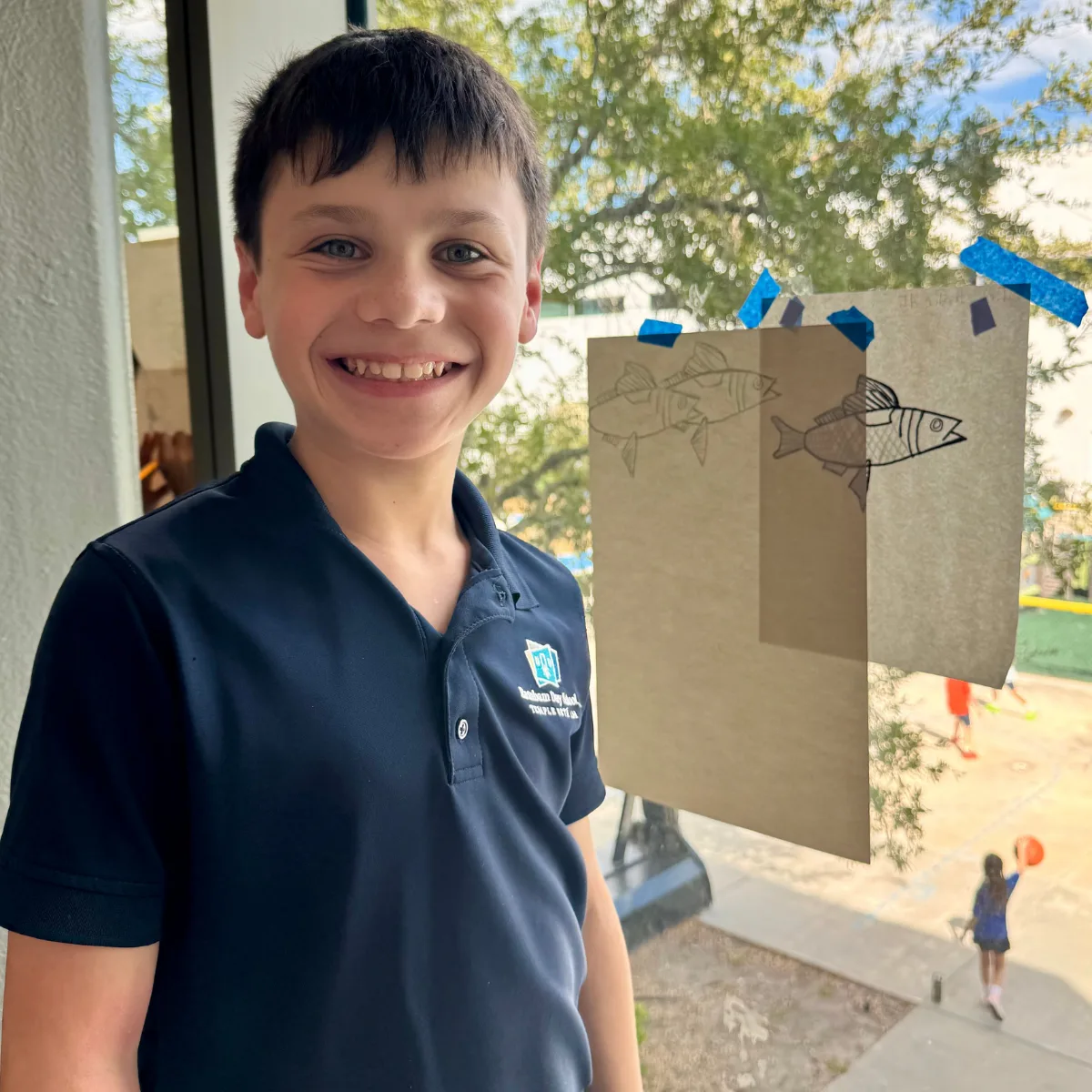
Our fifth graders are exploring the beauty of marine life through their latest art project, School of Fish Watercolor, inspired by the colorful ocean-themed artwork of artist Sherri Reeve. Students began by studying marine compositions and observing the shapes, patterns, and unique features of tropical fish. Using reference images, they sketched their own fish designs, focusing on creating bold, recognizable shapes while developing their observation and drawing skills.
Next, students began combining their individual designs into larger compositions, experimenting with overlapping shapes, placement, and balance to create a sense of movement and depth. Using natural light from classroom windows to trace their drawings, students explored how different elements can work together to create a cohesive piece of art. They will soon complete their compositions with vibrant watercolors, bringing their underwater scenes to life.
Throughout this project, students are developing their understanding of artistic composition, layering, and watercolor techniques while strengthening their creativity and attention to detail. By drawing inspiration from a professional artist and making thoughtful design choices, our fifth graders are discovering how individual ideas can come together to create one fin-tastic work of art!
Conscious Connections
Everyday Practices, Lasting Skills!
This year, Rambam Day School is integrating Conscious Discipline into our social-emotional curriculum. This approach helps children develop important skills like self-regulation, problem-solving, communication, and connection through intentional everyday interactions and routines. Each month, Conscious Connections will give you a quick look at one of these practices and how it is showing up in our classrooms and school community.
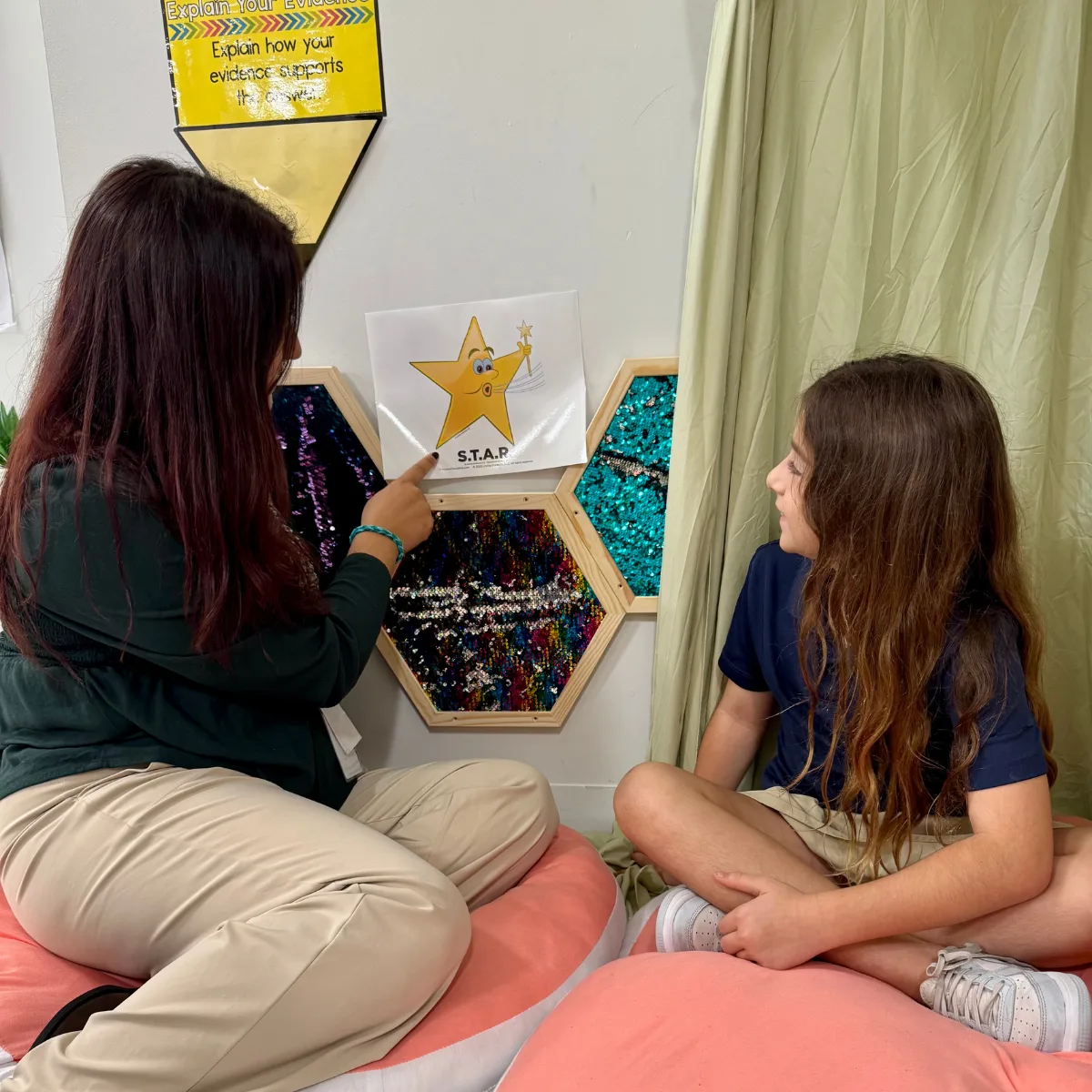
This Month: STAR Breathing
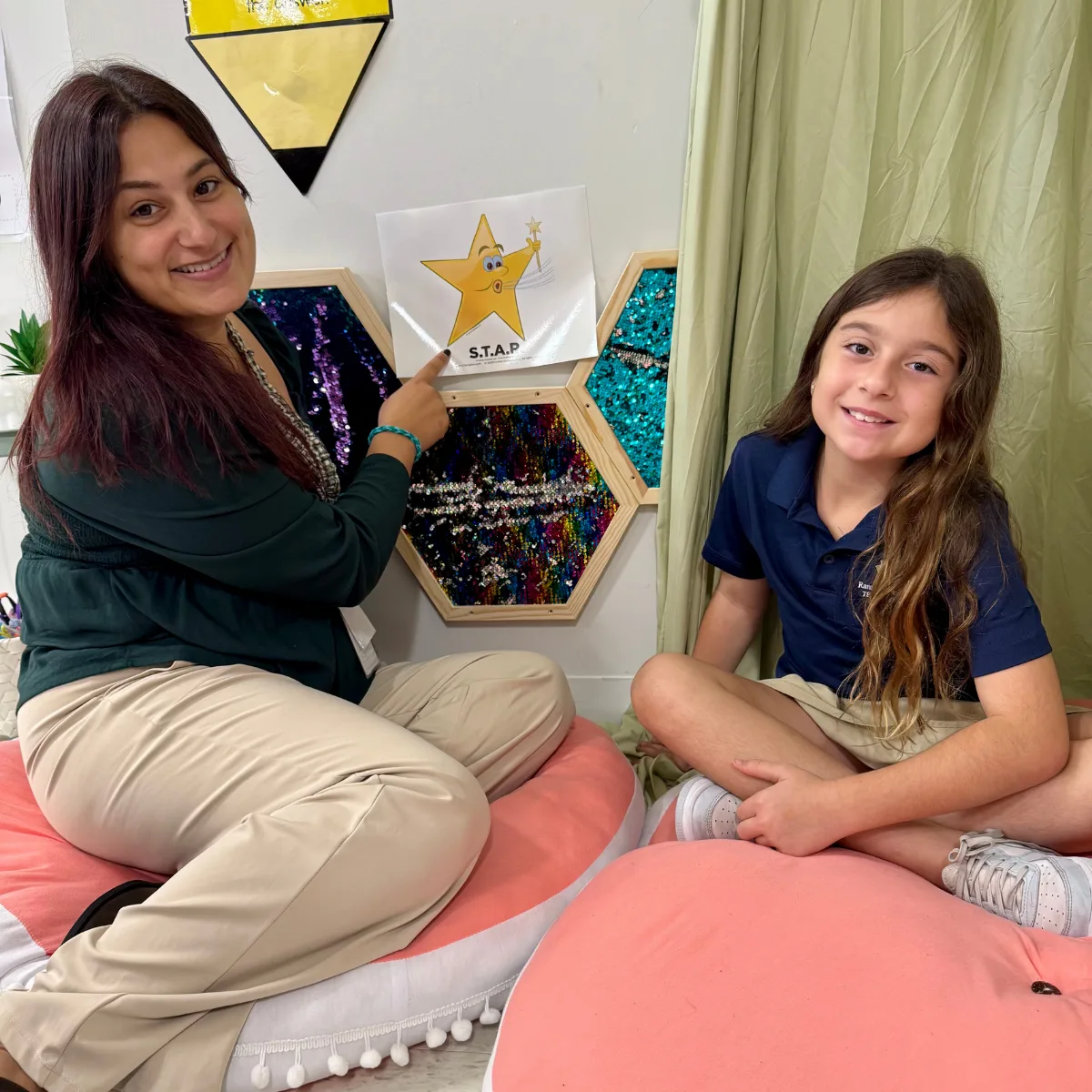
STAR stands for Smile, Take a deep breath, And Relax. This simple breathing exercise encourages children to slow down, take a deep breath, and release tension when they feel frustrated, overwhelmed, or upset. By practicing STAR Breathing regularly, students develop important self-regulation skills that help them navigate challenges and respond to situations with greater awareness.
Try it at home! The next time your child feels frustrated or overwhelmed, invite them to practice STAR breathing with you. Taking a moment to breathe together can help everyone reset and approach the situation with a calmer mindset.
Early Childhood:
Project-Based Learning
Project-Based Learning (PBL) is getting underway in our Early Childhood classrooms! Each class begins its PBL journey with a special opening event designed to spark curiosity, encourage questions, and introduce students to the topics they will explore in the weeks ahead. These engaging experiences set the stage for hands-on discovery, collaboration, and meaningful learning throughout their projects. As opening events continue across Early Childhood, we’re excited to share a few highlights from classrooms that have already begun their journeys!
2's: Storytelling
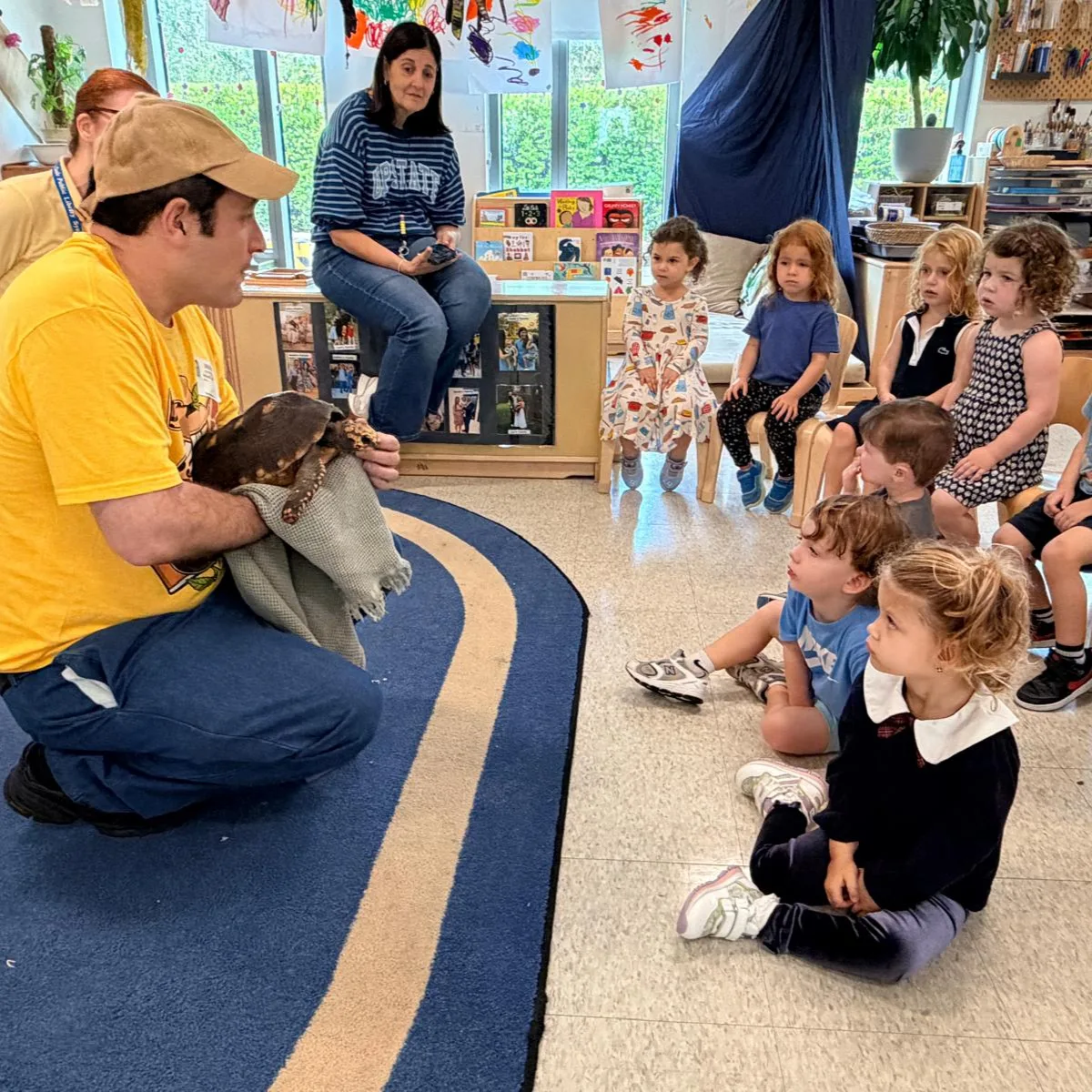
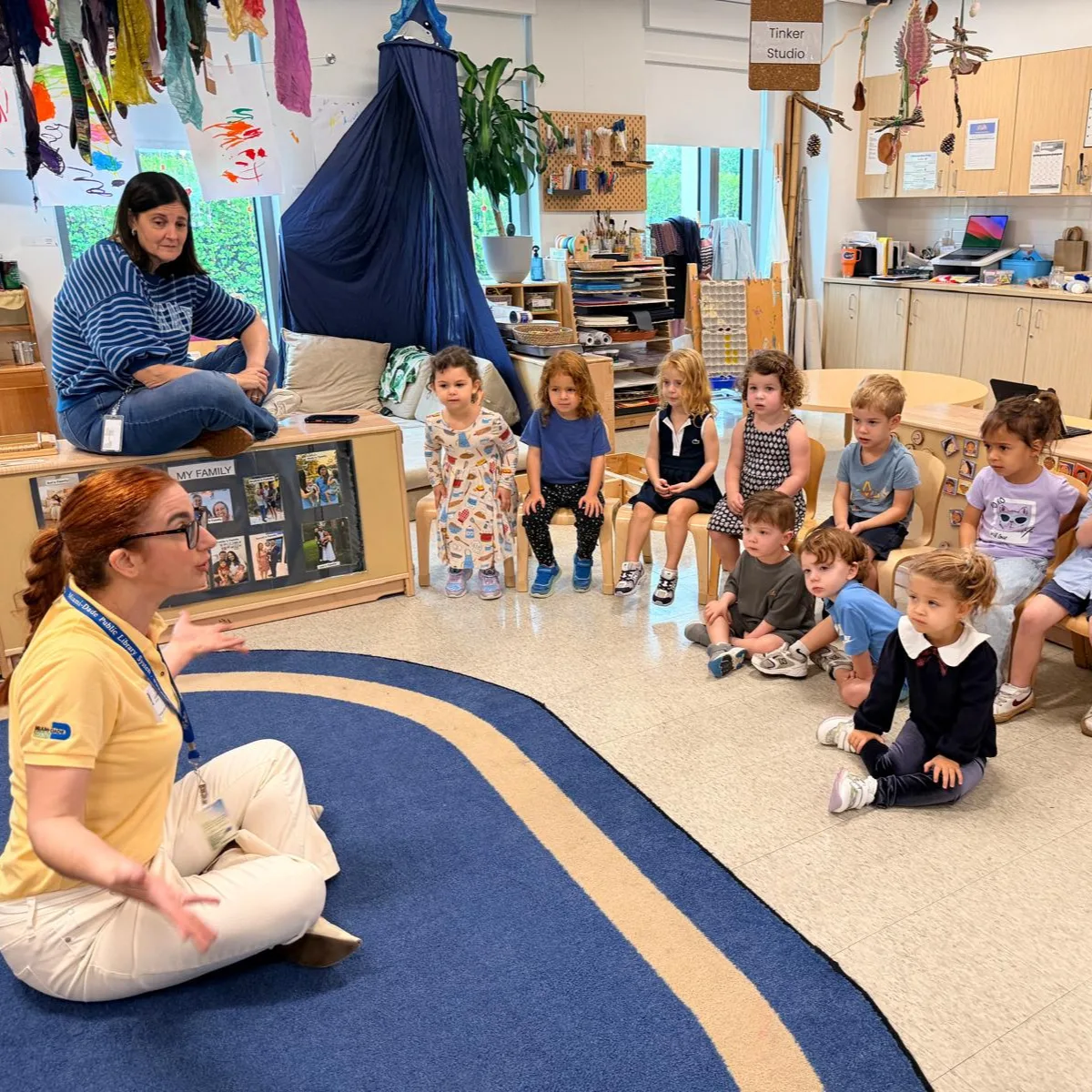
One of our 2s classes has kicked off its project-based learning exploration of storytelling, discovering how stories can come to life through imagination, creativity, and curiosity! To introduce the project, students enjoyed a special opening event where they listened to a story and even had the opportunity to meet one of its characters, a tortoise! As they continue their exploration, students will strengthen their listening and language skills while discovering how storytelling can spark curiosity, creativity, and connection.
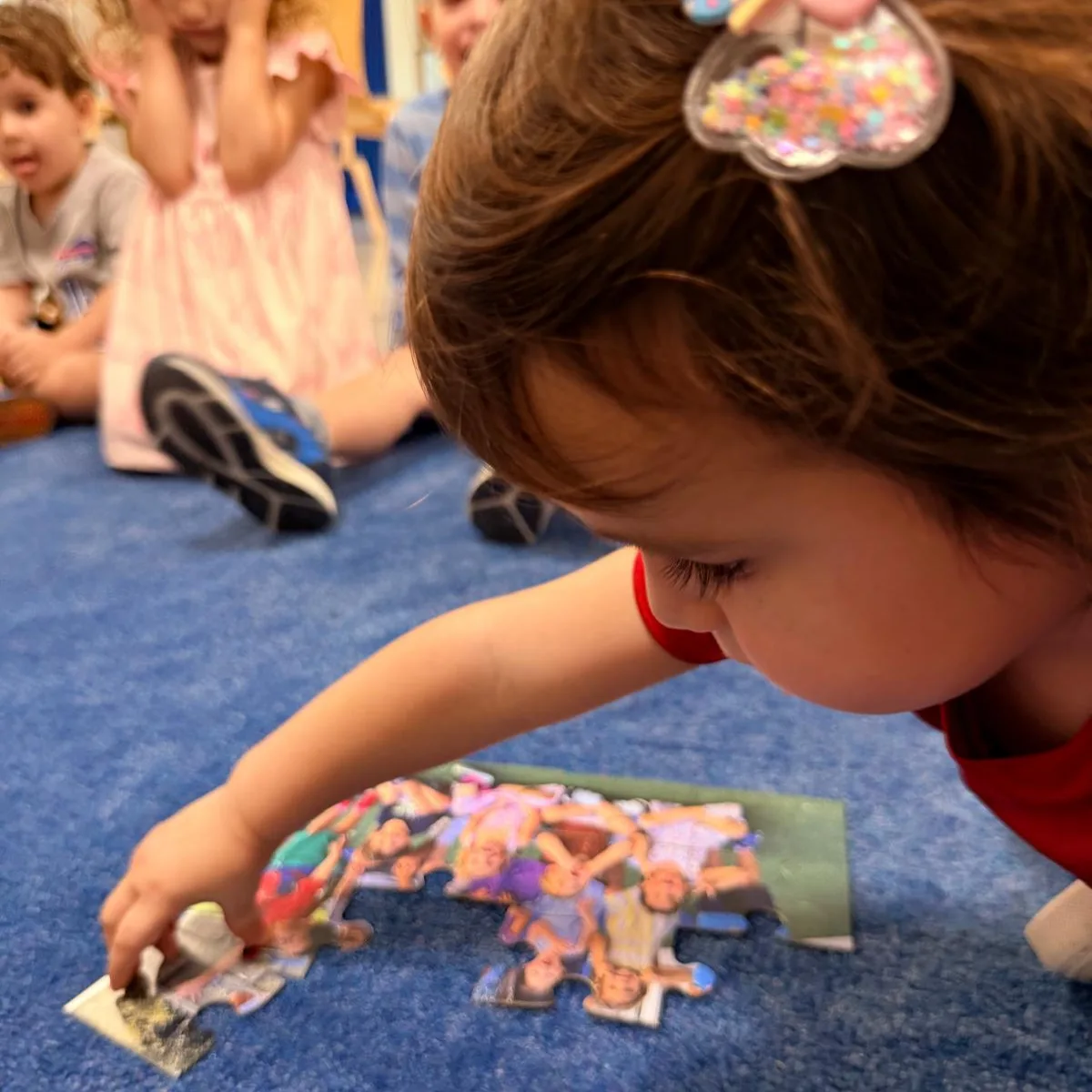
3's: Puzzles
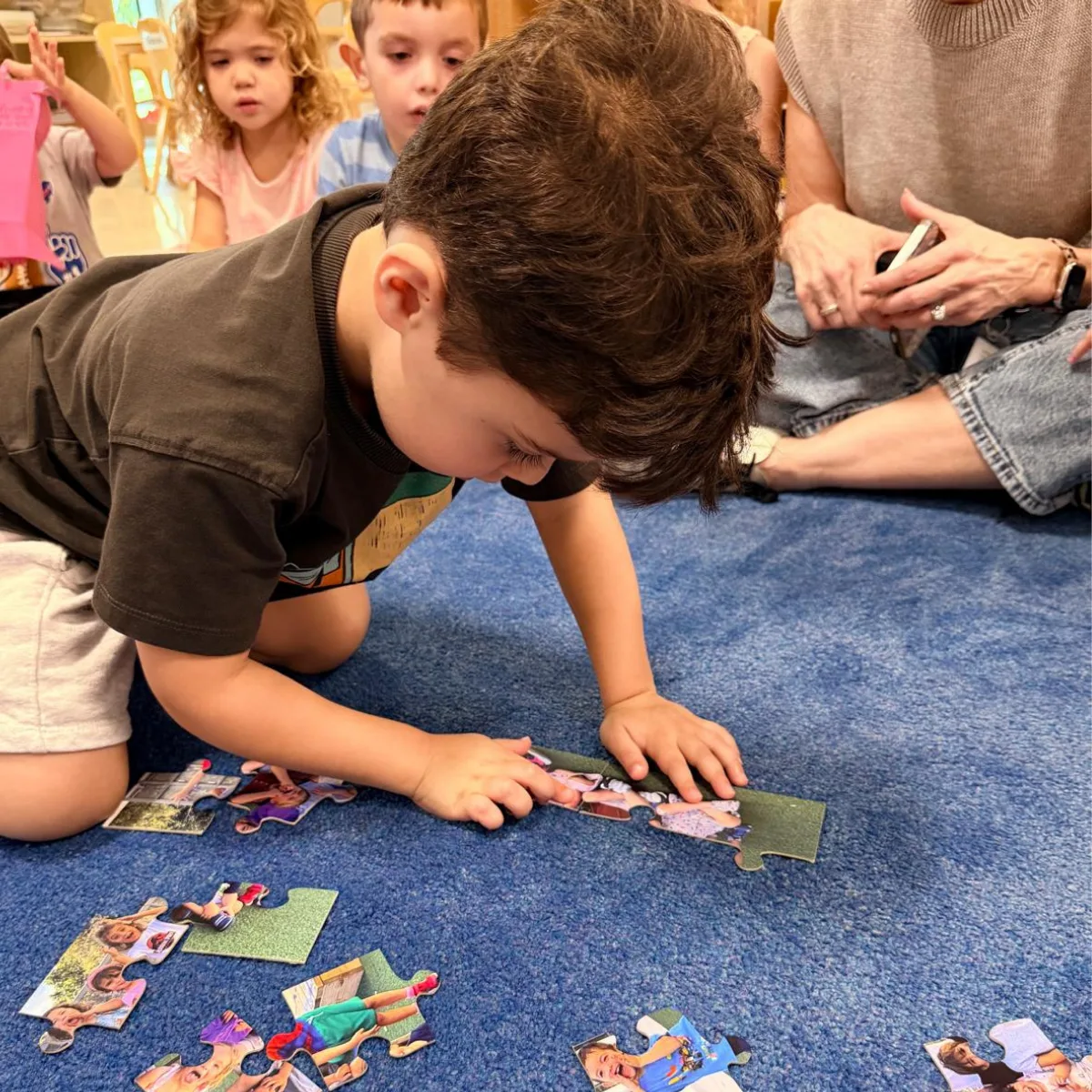
One of our 3s classes has kicked off its project-based learning exploration of puzzles, discovering how individual pieces fit together to create a complete picture! As part of their opening event, students explored puzzles of different shapes, colors, and patterns, practicing problem-solving and developing strategies to find where each piece belongs. As they continue their investigation, students will strengthen their critical thinking, visual recognition, and fine motor skills while building patience and confidence in their abilities.
4's: Tree Houses & Lizards
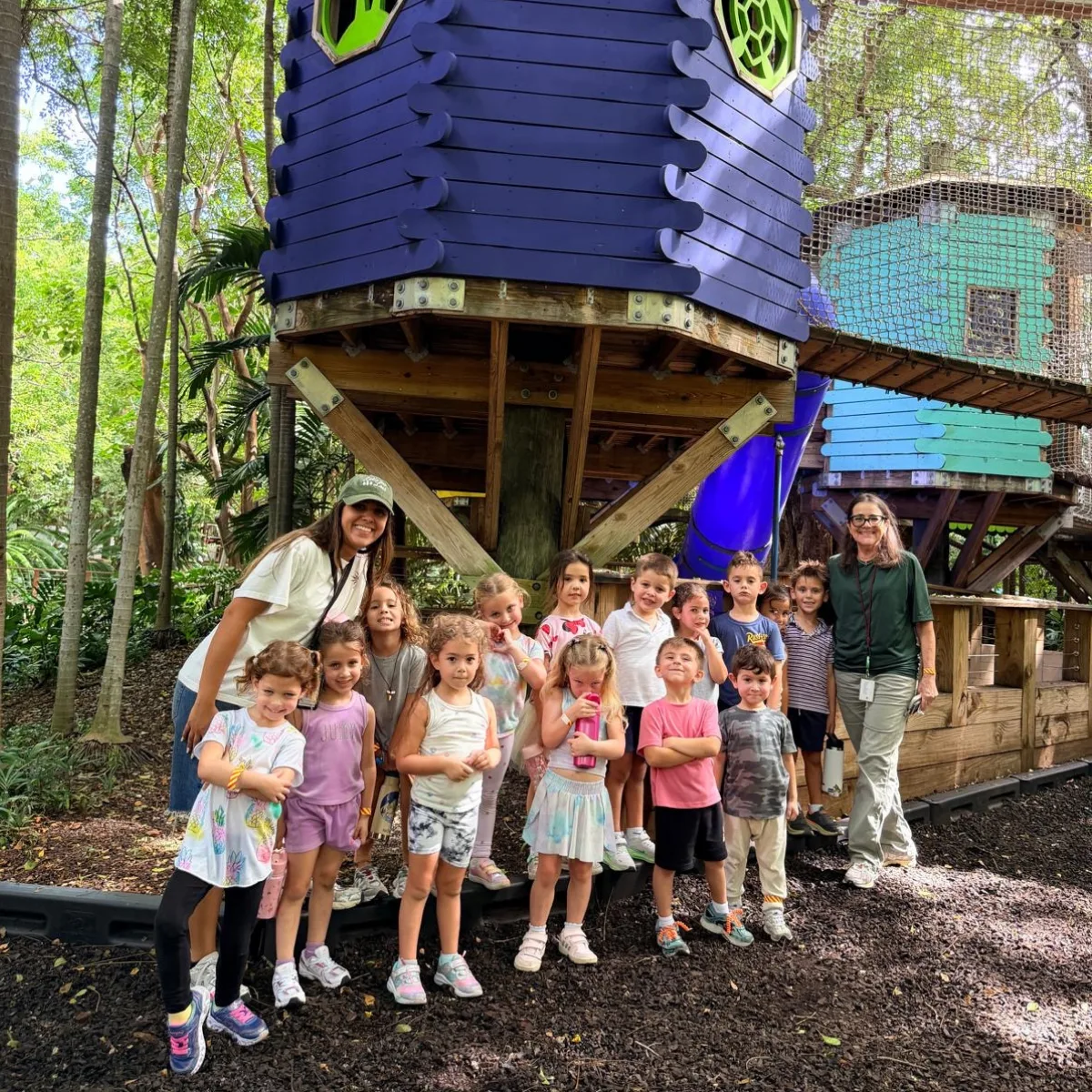
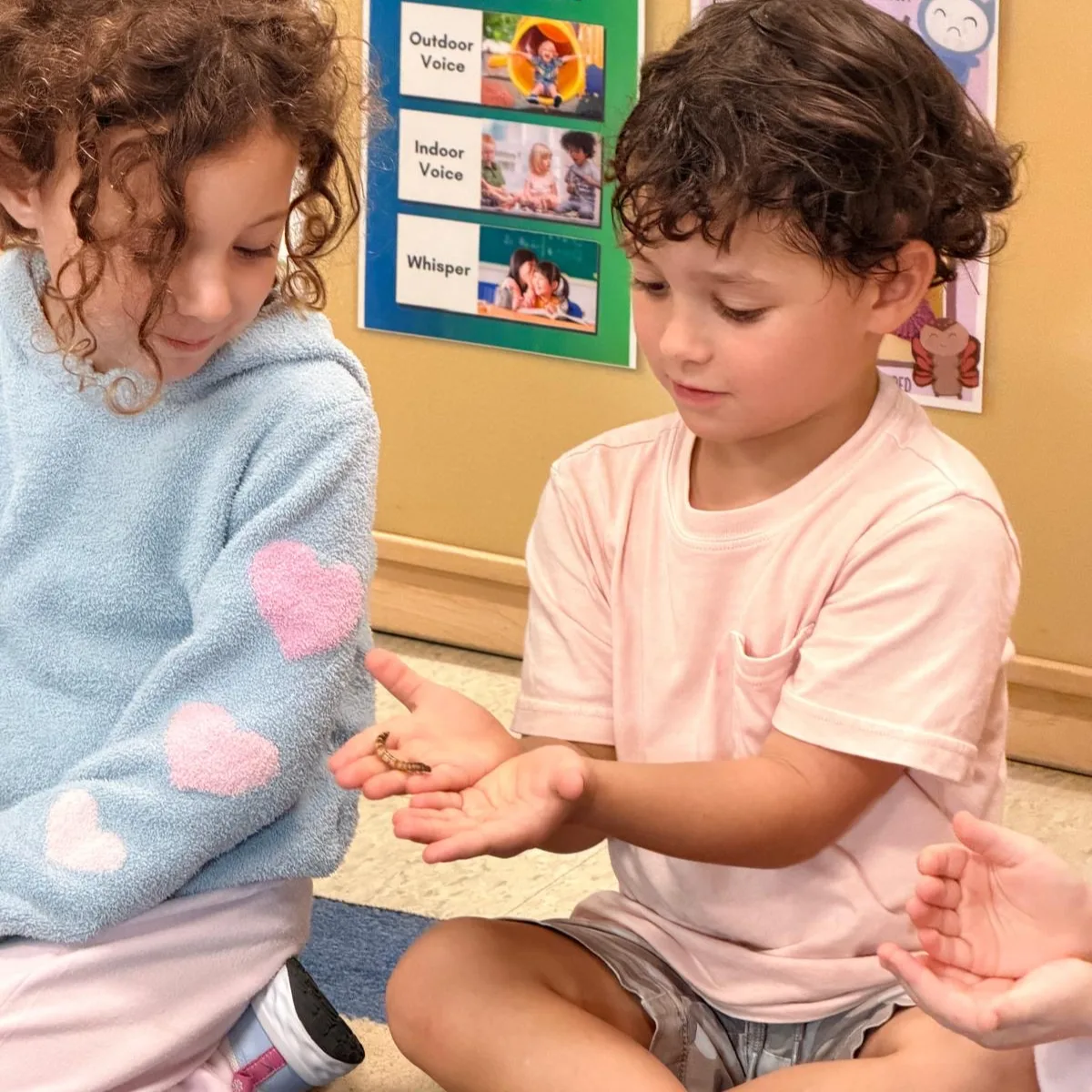
Two of our 4s classes have kicked off their project-based learning investigations with exciting opening events! One class is exploring the world of treehouses and began its investigation with a special visit to Jungle Island, where students observed their surroundings and found inspiration for their upcoming exploration. Another class is diving into the fascinating world of lizards, kicking off its project with a special classroom visit from a gecko! Through these hands-on experiences, students are asking questions, making observations, and building curiosity as they begin their investigations.